Designing the elevation for a single-floor house is about creating a stunning first impression. It’s a chance to blend beautiful aesthetics with practical living, using the home's exterior to define its entire personality. A thoughtful design can make even a compact space feel elegant and welcoming from the moment you see it from the street.
The Timeless Charm of Single Floor Living
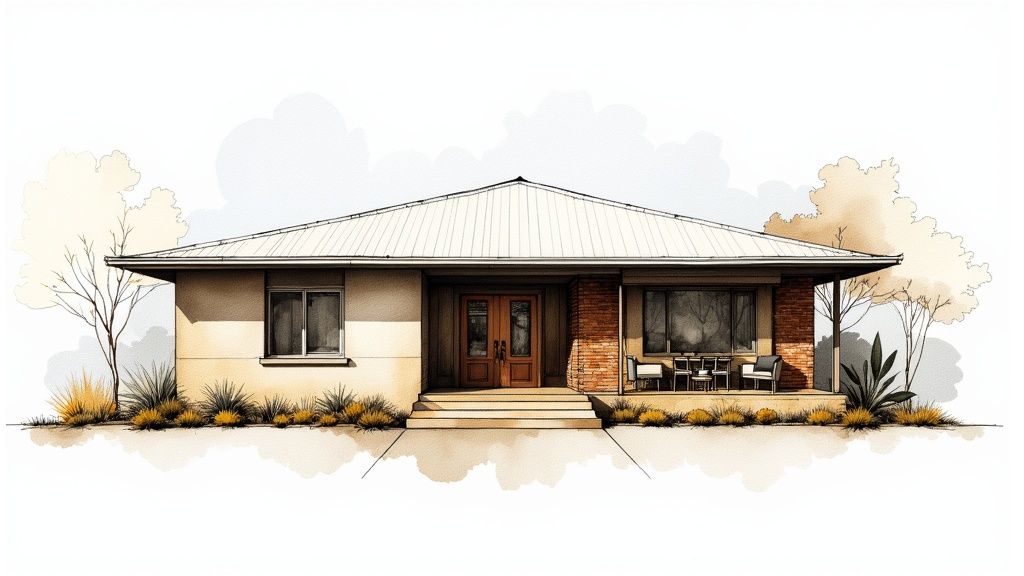
Single-floor homes are making a serious comeback, and it's easy to see why. They are celebrated for being simple, accessible, and often more cost-effective. The appeal is wonderfully straightforward: with everything you need on one level, the daily trek up and down stairs disappears. This makes for a much safer and more convenient environment for everyone, from young children to older family members.
This single-level layout really clicks with homeowners today who are looking for convenience and a home they can live in for the long haul. Building a single-storey house is typically less complex and easier on the budget than a multi-level one, as the foundation and structural needs are simpler. That practicality also carries over to upkeep—tasks like cleaning the windows or checking on the roof become far less of a chore.
But where the real magic happens is on the outside. A well-considered elevation design is what takes a basic structure and turns it into a true reflection of your personal style. It’s the very first thing people see, setting the stage for the entire feel of your home.
More Than Just a Pretty Façade
The power of a great elevation goes far beyond just looking good. It’s your opportunity to set the home’s character, whether you’re dreaming of a sleek, modern oasis or a cosy, traditional cottage. This idea is catching on quickly in India, where demand for affordable, compact single-floor homes jumped by 35% between 2020 and 2025 in major cities and surrounding areas.
A great elevation design acts as the "face" of your home. It’s a curated composition of materials, colours, and architectural features that tells a story and welcomes you inside.
Ultimately, crafting the perfect exterior is all about finding that sweet spot between visual appeal and everyday function. It impacts everything from kerb appeal and resale value to how energy-efficient your home is, based on how you use overhangs for shade, choose your materials, and place your windows.
For more ideas on striking this balance, have a look at our guide on creating a simple home front elevation. Grasping these fundamentals is the first step toward building a home that looks just as good on the outside as it feels on the inside.
Understanding the Language of Elevation Design
Great single-floor elevation designs don't just happen by accident. They’re built on a set of core principles that architects use to create exteriors that feel just right—harmonious, balanced, and visually satisfying.
Think of these principles as the grammar of design. Once you get the hang of them, you can look at any home’s facade and instantly understand what makes it work. It’s the difference between vaguely saying, "I want it to look nice," and confidently telling your architect, "I'm looking for a design with a strong sense of rhythm and an emphasised entryway."
The whole point is to create a composition where every single piece feels like it belongs.
Creating Visual Harmony and Balance
At the heart of any beautiful facade, you'll find Proportion and Scale. It’s a lot like composing a photograph; you want every element to feel appropriately sized in relation to everything else. This means the windows shouldn't feel like they're swallowing the walls, and the front door shouldn't look like a tiny afterthought. Good scale makes a home feel right for its inhabitants and its surroundings.
From there, we get to Balance, which gives a design a feeling of stability. Symmetrical balance is the classic, formal approach—imagine a central door with identical windows on either side, like a perfect mirror image. On the other hand, asymmetrical balance is more dynamic and modern. It achieves equilibrium by placing different elements of equal visual "weight" on either side of a central point.
To get a better sense of how these pieces fit together, you can learn more about the role of elevations in architecture in our detailed guide.
Guiding the Eye with Rhythm and Focus
Next, architects use Rhythm to direct how your eyes move across the facade. Just like a beat in a song, architectural rhythm is all about repeating elements to create a predictable, pleasing pattern.
-
Repeating Windows: A series of identical windows creates a steady, calming visual flow.
-
Vertical Pillars: Columns on a porch can establish a strong, orderly beat.
-
Textural Bands: A line of different material or horizontal grooves can lead your eyes from one end of the home to the other.
This visual journey should always lead somewhere, which brings us to the principle of Emphasis. Every great design has one dominant feature that immediately grabs your attention. Most of the time, this is the front door, made to stand out with a bold colour, an interesting canopy, or unique lighting.
An elevation without a clear point of emphasis can feel confusing or bland. By making the entrance a focal point, the design immediately communicates "welcome."
Finally, Materials and Textures are what give a home its personality. The choice between warm, rustic brick and sleek, smooth plaster completely changes the character of a single-floor elevation. Mixing textures—like rough-cut stone next to smooth metal trim—is what adds depth and keeps a facade from looking flat. It’s the interplay of these materials that truly brings all the other design principles to life.
Exploring Popular Single Floor Elevation Styles
Choosing a style for your single-floor elevation is a lot like deciding on the personality of your home. It’s that first impression, where your taste meets the architectural canvas. This decision goes beyond just curb appeal; it shapes the entire feeling you get every time you pull into the driveway.
Most elevation designs for single-storey homes tend to fall into one of three main camps, each with its own distinct character. Getting to know these styles is the best starting point for creating a facade that truly feels like you.
Modern and Minimalist Designs
The modern look is defined by its clean, uncluttered philosophy. The mantra here is truly "less is more." These designs lean heavily on bold geometric shapes, flat or very low-pitched roofs, and massive panes of glass that practically erase the line between inside and out.
A few things you'll almost always see:
-
Clean Geometry: Think straight lines and cubic forms. You won’t find any fussy ornamentation here.
-
Large Glazing: Floor-to-ceiling windows and sliding glass doors are a staple, flooding the home with natural light and creating an incredible sense of space.
-
Simple Colour Palette: The palette is typically restrained, focusing on neutrals like white, grey, and black. A pop of a single bold colour or the warmth of natural wood is often used as a striking accent.
This approach creates a sophisticated and elegant facade that feels sharp, current, and built to last. For a closer look at this aesthetic, our guide to creating a stunning modern house elevation has plenty of inspiration.
Traditional and Vernacular Charm
Drawing from India’s incredible architectural heritage, traditional styles are all about celebrating craftsmanship, local materials, and designs that have stood the test of time. These homes feel warm, inviting, and deeply connected to their cultural roots. The goal is a home that feels both impressive and beautifully grounded.
Picture sloping, terracotta-tiled roofs, intricately carved wooden pillars, and wide, welcoming verandahs—the perfect spot for a morning cup of chai. These aren't just for show, either. They’re smart, climate-responsive features.
Traditional elevations tell a story of heritage and place. Features like jaali screens offer privacy and ventilation, while deep overhangs provide crucial shade from the harsh sun, blending beauty with practicality.
Materials like brick, stone, and wood are layered to create a rich tapestry of textures. The colours are often earthy and warm, reflecting the natural landscape and creating a truly cosy atmosphere. To see how these ideas come to life, you can explore custom home elevations that showcase this incredible diversity.
Contemporary Fusion: A Perfect Blend
But what if you love the clean confidence of modern design but can’t resist the warmth of traditional touches? This is where contemporary fusion comes in. It’s an artful mix that offers the best of both worlds, blending modern simplicity with traditional character for a look that’s completely your own.
The magic of this style is in the balance. You might see a clean, flat-roofed building softened by a traditional brick feature wall, or a minimalist facade warmed by a classic wooden verandah. It’s a creative conversation between old and new, resulting in a design that is both familiar and excitingly different. The trick is to pick a few key elements from each style and weave them together so the final result feels cohesive, not cluttered.
For a clearer picture, here's a quick breakdown of how these styles compare.
Comparing Popular Single Floor Elevation Styles
| Style | Key Characteristics | Common Materials | Overall Feel |
|---|---|---|---|
| Modern | Clean lines, geometric forms, flat/low roofs, large windows. | Concrete, steel, glass, stucco, wood accents. | Sleek, sophisticated, minimalist. |
| Traditional | Sloping roofs, arches, detailed carvings, verandahs, courtyards. | Terracotta tiles, brick, stone, wood, lime plaster. | Warm, inviting, rooted in heritage. |
| Contemporary | A mix of modern forms with traditional textures and features. | A blend of materials like concrete with brick, or glass with wood. | Personalised, balanced, unique. |
Ultimately, whether you lean towards the crispness of modern design, the richness of tradition, or a creative fusion of the two, the right style is the one that reflects your vision for your home.
Balancing Aesthetics with Everyday Practicality
A beautiful elevation is wonderful, but if it doesn't work for your day-to-day life, it's just a pretty picture. The real magic in designing a single-floor home is weaving stunning visuals with down-to-earth functionality. An exterior that looks great but creates daily headaches is a design failure, plain and simple.
This means we have to think beyond the curb appeal and consider how you actually live in the space. Take parking, for example. It's a common issue where a massive garage door can easily overpower the entire look of the house. Instead of letting it dominate, we can integrate it gracefully. A well-placed pergola, a wall section clad in a beautiful material, or even some clever landscaping can soften its presence and redirect attention to your front door, where it belongs.
This blend of form and function goes deeper, touching on cultural and spiritual needs as well. For many homeowners in India, designing according to Vastu principles is non-negotiable, and these ancient guidelines can be beautifully woven into a modern elevation.
Harmonising Design with Vastu and Climate
If you follow Vastu, you know the main entrance is a gateway for positive energy. Entrances facing north, east, or northeast are typically ideal. This isn't a limitation; it's a creative springboard. We can use this as a starting point to make the entryway a real focal point, using specific colours, lighting, and materials that honour Vastu principles while looking fantastic.
Beyond spiritual harmony, your home has to stand up to the local climate. A climate-responsive design isn't just jargon—it's a smart strategy for staying comfortable and saving money on your energy bills.
-
Strategic Overhangs: Think deep roof eaves or traditional chajjas. They're not just for show; they cast essential shade that keeps your home cool during those scorching summer afternoons.
-
Window Placement: It’s all about working with the sun, not against it. We position larger windows to capture the gentle morning light while shielding the house from the harsh western glare, cutting down the need to blast the air conditioning.
-
Material Choice: The materials we choose make a huge difference. Using light-coloured, reflective materials for the roof and walls can dramatically reduce how much heat your home absorbs.
This diagram breaks down how different architectural styles tackle these practical considerations.
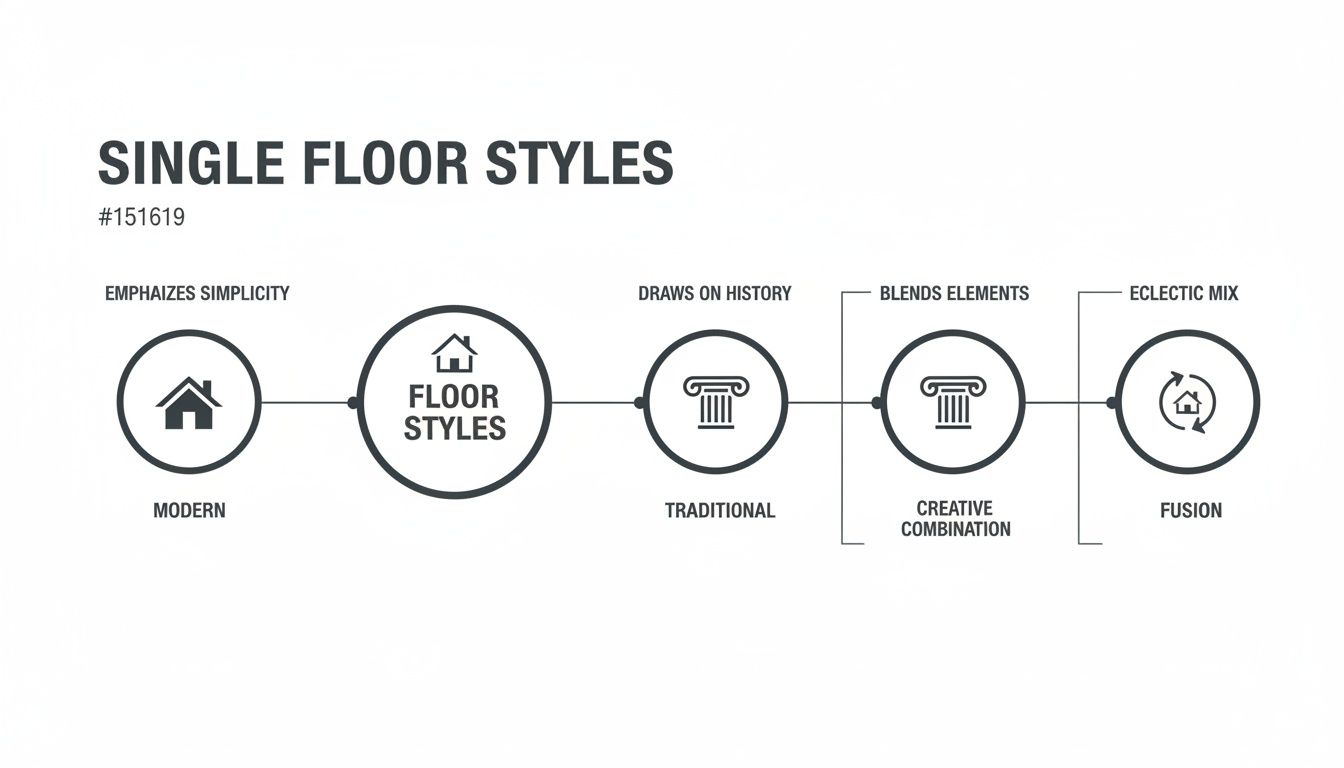
Whether you lean modern, traditional, or somewhere in between, these core ideas of practical, climate-aware design are the foundation of a home that’s truly a pleasure to live in.
Prioritising Safety and Accessibility
At the end of the day, one of the most powerful arguments for single-floor living is safety. When you get rid of staircases, you instantly create a home that’s safer and more accessible for everyone, from a toddler taking their first wobbly steps to an elderly parent.
This focus on accessibility isn't just about convenience. It’s a long-term investment in your family’s well-being, allowing for graceful ageing in place and providing invaluable peace of mind.
This is a major reason why single-floor living is gaining so much traction across India. Recent data shows that 52% of new homes in retirement-heavy regions like Punjab and Gujarat are single-floor layouts, chosen specifically to remove the risk of stairs. This one design choice is estimated to slash fall-related incidents for children and seniors by an incredible 80%. You can explore more insights on this trend and its profound impact on how we design our homes.
Creating a High-End Look on a Smart Budget
You don't need an extravagant budget to create an elegant front elevation. The key to a luxurious look for your single-floor home is making smart, strategic choices that deliver maximum visual impact without breaking the bank. It's all about clever material selections and simple design details that feel expensive, even when they aren't.
Think "less is more." A minimalist design often looks more refined and modern, and as a bonus, it’s usually more affordable to build. The focus shifts away from over-the-top ornamentation and towards the simple beauty of well-chosen textures and clean, intentional lines.
Smart Material Swaps and Design Tricks
Instead of splurging on natural stone or extensive woodwork, you can get a similar aesthetic with more budget-friendly alternatives. Textured cement plaster, for instance, can be finished in countless ways to create a sophisticated, monolithic facade. A few well-placed accents of exposed brick can also add incredible warmth and character for a fraction of what a full brick exterior would cost.
Simple design details can also pack a huge visual punch.
-
Clean Grooves: Cutting simple, clean grooves into a plaster finish is a fantastic trick. It creates subtle shadow lines that add depth and give the home a modern, custom-built feel.
-
Wood-Look Alternatives: Consider using high-quality wood-look tiles or fibre cement planks for canopies or feature walls. You get the warm, natural appearance of timber without the hefty price tag and constant upkeep.
-
Strategic Colour: Never underestimate the power of a great paint job. A thoughtful colour scheme can highlight architectural features and pull the entire look together. Check out our guide on selecting the perfect home exterior colour design to make your elevation truly stand out.
Many people think luxury means expensive materials. The truth is, luxury in design comes from thoughtful composition and attention to detail, not just the price tag of the cladding.
This cost-effective approach is changing how homes are built, particularly in rural and semi-urban areas. Low-cost normal front elevation designs for single-floor homes are booming in India, with recent insights from Housiey.com showing a clear trend.
In fact, for 2025-26, it's estimated that 70% of village constructions under ₹20 lakhs are opting for a combination of brick, plaster, and cement paint. This simple switch slashes exterior finishing costs by a massive 30-35% compared to using glass or stone. By embracing these strategies, you can build a stunning home that looks anything but cheap.
Visualising Your Dream Home Before You Build
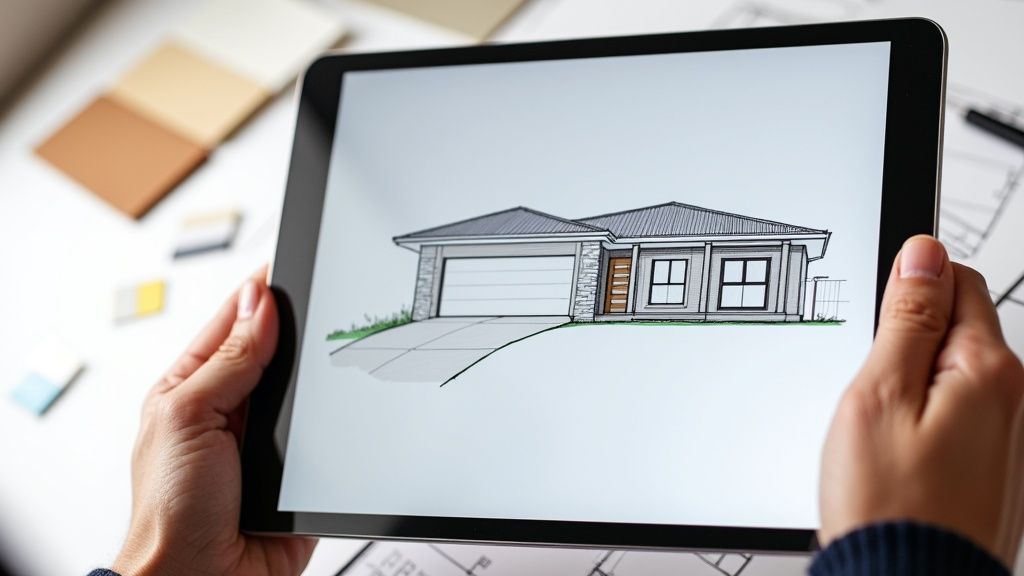
Let's be honest, it’s tough to look at a flat, two-dimensional blueprint and truly picture what your home will look like. How will the materials really feel? How will the morning light hit the porch? This is where modern visualisation tools become an architect's and homeowner's best friend, especially when perfecting elevation designs for single floor houses.
Photorealistic 3D renders have completely changed the way we design. Imagine taking a virtual walk around your future home, seeing it from every angle before a single shovel hits the ground. This isn't just about getting a vague idea; it's about moving past the guesswork and making decisions with absolute confidence.
From Blueprint to Realistic Vision
With 3D visualisation, you can play around with finishes, colours, and textures, seeing the impact of your choices instantly. This is a critical step that helps sidestep expensive changes and "I wish we had..." moments during construction. It ensures the final home is exactly what you had in mind.
You can really dig into the details:
-
Material Selection: Curious how that stone cladding looks next to a smooth plaster finish? Now you can see it and compare.
-
Colour Palettes: Test drive different colour schemes, seeing how they hold up in the bright afternoon sun versus the soft glow of dusk.
-
Lighting Effects: Plan your exterior lighting and see exactly which features will be beautifully highlighted after dark.
This technology makes collaborating with your architect so much more intuitive. You can stop trying to find the right words and simply point to a detailed image and say, "That's it. That's what I want." To see your home's exterior and interior come to life, exploring real estate virtual staging software can provide some powerful options.
3D rendering is the bridge between imagination and reality. It’s that final, crucial check to make sure every design choice sings in harmony, letting you sign off on the plans with total peace of mind.
By making this technology part of your process, you are truly in the driver's seat. To learn more about how this works, our guide on 3D rendering for a house exterior walks you through how these visuals bring a home to life.
Answering Your Single-Floor Elevation Questions
When you start digging into elevation designs for single-storey homes, the same handful of questions almost always pop up. It's completely natural. Clients often ask me what materials will actually stand up to the harsh Indian climate, or how we can blend a clean, modern look with the time-tested principles of Vastu.
One of the most frequent challenges is height. How do we stop a single-floor house from looking squat or underwhelming? The trick is to think vertically. By introducing elements that draw the eye upward, we can create a powerful illusion of height. Think slender columns, tall and narrow windows, or even vertical grooves in the plaster finish. These simple additions can give the home a much grander, more elegant stature.
And of course, there's always the question of budget. People often assume a striking elevation must come with a hefty price tag, but that’s rarely the case. The secret is in smart material choices and a strong design vision. You can achieve a truly sophisticated facade using affordable but durable materials like textured plaster, strategic brick accents, or high-quality elevation tiles. In architecture, a well-thought-out, clean design will always look more timeless and impactful than a cluttered one—and it’s almost always more cost-effective.
Ready to see how these ideas look on your own project? With Vibe3D, you can bring your models to life with stunning, photorealistic renders in just seconds. It's the best way to make confident decisions before a single brick is laid. Explore Vibe3D and start visualising today.