Your home's elevation is more than just a facade; it's the first impression, a statement of style, and a promise of the life within. It dictates curb appeal, influences property value, and sets the tone for your entire architectural vision. A well-executed elevation harmonises form and function, creating a structure that is both aesthetically pleasing and structurally sound. This critical design element goes far beyond a simple two-dimensional drawing; it's the bridge between a blueprint and a built reality.
Navigating the world of house elevation designs can be overwhelming. From the sleek, clean lines of Modernism to the rustic charm of a Contemporary Farmhouse, each style tells a different story through its unique language of materials, proportions, and detailing. Understanding these nuances is key to creating a home that is not only beautiful but also cohesive and intentional. Beyond aesthetics, practical considerations like understanding local flood zone elevation requirements are crucial for a safe, compliant, and resilient home design.
This guide moves beyond surface-level descriptions to offer a deep strategic analysis of 10 distinct architectural elevation styles. We will explore the subtleties of material selection, the importance of balance and proportion, and context-specific adaptations for different climates and budgets. For each example, we provide actionable takeaways and practical guidance to help you apply these concepts to your own projects. Get ready to transform your architectural ideas into compelling visual realities.
1. Modern Minimalist Elevation
Modern minimalist house elevation designs, a cornerstone of the broader modern house elevation movement, are a testament to the principle that "less is more". This architectural style, popularised by visionaries like Ludwig Mies van der Rohe, prioritises clean lines, uncluttered surfaces, and geometric forms. It strips away ornamentation to focus on the purity of the structure itself, using materials like steel, glass, and concrete to create a sleek and sophisticated façade. Functionality is paramount, with every element serving a distinct purpose.
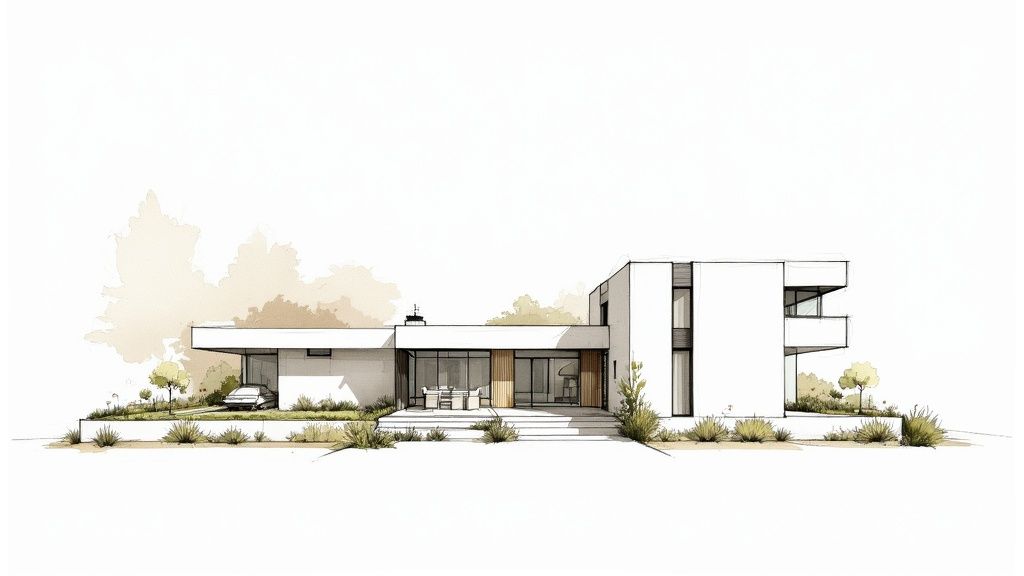
This approach is highly effective for creating a sense of calm and order. The emphasis on large glazed openings, as seen in Philip Johnson's Glass House, not only floods interiors with natural light but also dissolves the boundary between inside and out. The result is a structure that feels connected to its environment while maintaining a powerful, understated presence.
Strategic Breakdown
-
Material Honesty: The design showcases materials in their raw form. A concrete wall is left exposed, a steel beam is celebrated, not hidden. This adds texture and authenticity.
-
Geometric Purity: The elevation is a composition of simple shapes like cubes, rectangles, and straight lines. Roofs are typically flat or have a very low pitch, reinforcing the clean, horizontal profile.
-
Negative Space: The empty spaces, such as voids, overhangs, and uncluttered walls, are as important as the solid forms. They create visual balance and prevent the design from feeling monolithic.
Actionable Takeaways
To successfully implement a modern minimalist elevation, focus on precision and quality.
Key Insight: The simplicity of minimalism means there is no room for error. Every joint, material transition, and line must be perfectly executed. The quality of the materials themselves becomes a primary design feature.
When designing, consider the interplay of solid and void. Balance expansive glass panels with solid walls for privacy and visual weight. Use strategic lighting to accentuate the clean lines and geometric shapes after dark, transforming the elevation into a sculptural feature. For your Vibe3D renderings, focus on crisp, realistic materials and use a simple sun-and-sky lighting setup to create sharp, defined shadows that highlight the building's form.
2. Traditional Colonial Elevation
Traditional Colonial house elevation designs are rooted in the formal, symmetrical architecture of 18th and 19th-century America. Inspired by classical European precedents, this style conveys a sense of stability, heritage, and timeless elegance. Its enduring appeal lies in its orderly composition, featuring a centred front door, evenly spaced multi-pane windows, and a prominent pitched roof, often with dormers. Materials like brick, stone, and wood siding are staples, creating a distinguished and stately façade.
This architectural language, seen in historic homes like George Washington's Mount Vernon, is defined by its classical proportions and attention to detail. The façade is a carefully balanced arrangement of elements, where the entry serves as the central axis from which the rest of the design radiates. The result is a structure that feels grounded, formal, and deeply connected to architectural tradition, offering a powerful statement of enduring grace.
Strategic Breakdown
-
Symmetrical Organisation: The front elevation is strictly symmetrical. The front door is the midpoint, with an equal number of windows and decorative elements mirrored on either side.
-
Classical Detailing: Elements like pediments above the door, decorative shutters (often functional in original designs), and multi-pane sash windows are crucial. These details add character and authenticity.
-
Formal Entry: The entrance is a focal point, often accentuated with columns, a portico, or an elaborate door surround. This creates a grand and welcoming first impression.
Actionable Takeaways
To execute a Traditional Colonial elevation successfully, authenticity and proportion are paramount.
Key Insight: The elegance of a Colonial elevation is not in its complexity but in its disciplined adherence to classical rules of balance and proportion. Every element, from window size to roof pitch, must work in harmony.
When designing, maintain a strict grid-like symmetry. Use high-quality, traditional materials like real wood for trim and shutters and authentic brick or clapboard siding. Symmetrical landscaping, such as matching planters or parallel pathways, reinforces the formal character of the elevation. For Vibe3D renderings, focus on materials that show subtle weathering and texture, and use soft, directional lighting to highlight the classical details and create gentle shadows that give the façade depth and dimension.
3. Contemporary Farmhouse Elevation
The contemporary farmhouse elevation masterfully blends rustic comfort with modern sophistication, creating a look that is both nostalgic and current. This style, popularised by influential designers like Chip and Joanna Gaines, reinterprets traditional agricultural architecture for the 21st century. It keeps the classic gabled rooflines, welcoming porches, and simple forms of the past while introducing modern materials, larger windows, and a cleaner, more refined colour palette.
This approach to house elevation designs creates a warm, inviting façade without sacrificing modern amenities or a clean aesthetic. The style often features vertical board-and-batten siding alongside traditional lap siding, creating textural interest. Key elements like standing-seam metal roofs, gooseneck light fixtures, and large barn-style garage doors provide authentic touches, grounding the modern elements in a familiar, comforting style.
Strategic Breakdown
-
Textural Layering: The design mixes different siding materials, such as board-and-batten, horizontal siding, and natural stone or brick accents. This adds visual depth and character to the elevation.
-
High-Contrast Palette: A common strategy involves using a crisp white or light-coloured body with bold black or charcoal accents for windows, roofing, and trim. This modernises the traditional form.
-
Simplified Forms: While referencing historic farmhouses, the contemporary version simplifies the forms, removing fussy ornamentation in favour of clean lines and a strong, straightforward silhouette.
Actionable Takeaways
To execute a successful contemporary farmhouse elevation, focus on achieving a harmonious balance between old and new.
Key Insight: The success of this style lies in the intentional contrast. Modern, black-framed windows look striking against traditional white siding, and a sleek metal roof provides a crisp counterpoint to rustic stone foundations.
When developing your design, prioritise the exterior material palette. Use a mix of textures but keep the colour scheme restrained to maintain a modern feel. For your Vibe3D renderings, focus on realistic material textures like wood grain and the subtle sheen of a metal roof. Use soft, diffused lighting to simulate an overcast day, which highlights the textural variations and creates an inviting, home-like atmosphere in your presentation.
4. Mediterranean Revival Elevation
Mediterranean Revival house elevation designs transport the warmth and romanticism of coastal Europe to any setting. This architectural style, drawing heavily from Spanish and Italian villas, is characterised by its emphasis on indoor-outdoor living, rustic textures, and a sense of timeless elegance. It uses materials like stucco, terracotta, and wrought iron to create a façade that feels both substantial and inviting, evoking a leisurely, luxurious lifestyle.
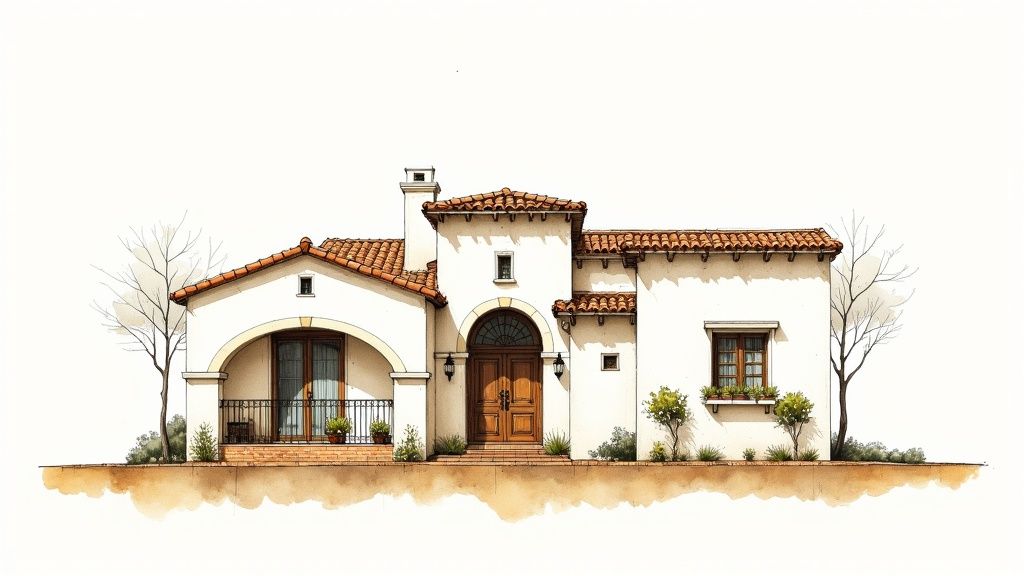
Popularised in coastal U.S. states by architects like Julia Morgan, this approach is perfectly suited for warm climates. The thick stucco walls provide excellent insulation, while features like courtyards and verandas offer shaded retreats from the sun. The result is a home that is not only beautiful but also inherently practical for its environment, blending Old World charm with modern comfort. For more inspiration, you can find a deeper exploration of Mediterranean Revival Elevation on our blog.
Strategic Breakdown
-
Key Architectural Elements: The design is defined by low-pitched, red terracotta tile roofs, arched windows and doorways, and smooth stucco exterior walls, often in white or earthy tones.
-
Ornamental Details: Wrought-iron balconies, gates, and window grilles are essential decorative features that add intricate detail and authenticity. Heavy wooden doors and colourful tile accents further enhance the style.
-
Integration with Landscape: The elevation is designed to harmonise with its surroundings. Courtyards, patios, and gardens are treated as extensions of the home, often featuring fountains, pergolas, and lush plantings like olive trees and lavender.
Actionable Takeaways
To achieve an authentic Mediterranean Revival look, focus on material choice and architectural form.
Key Insight: The success of this style lies in its textural richness and authentic details. The slight imperfections in hand-applied stucco or the colour variations in real terracotta tiles are features, not flaws, that contribute to the overall character.
When planning your design, prioritise the graceful curves of arches and the strong horizontal line of the roof. Use deep-set windows to create dramatic shadow lines that give the elevation depth and dimension. For your Vibe3D models, apply stucco materials with subtle procedural textures to mimic a hand-trowelled finish and use warm, golden-hour lighting to accentuate the earthy tones and create an inviting, romantic atmosphere.
5. Industrial Loft Elevation
Industrial loft house elevation designs celebrate the raw, functional aesthetic of warehouses and factories, transforming them into sophisticated urban dwellings. This style originated from the adaptive reuse of industrial buildings in cities like New York and London, where artists and creatives repurposed vast, open spaces. It is characterised by its honest display of structural elements, the use of utilitarian materials, and a focus on large, open volumes.
The appeal of this elevation lies in its authenticity and historical character. Facades often feature exposed brickwork, large steel-framed windows reminiscent of old factories, and visible structural steel beams. This design philosophy finds beauty in imperfection and utility, creating a sturdy, resilient architectural statement that connects the residence to a city's industrial heritage.
Strategic Breakdown
-
Material Authenticity: The design showcases materials in their unvarnished state. Exposed brick, weathered steel, raw concrete, and reclaimed timber are core to the palette, celebrating their texture and history.
-
Structural Expression: Key structural components like steel beams, trusses, and support columns are deliberately exposed on the exterior, becoming a central feature of the elevation's design.
-
Grid-Based Fenestration: Large, multi-pane windows, often with dark metal frames like Crittall-style windows, are arranged in a grid. This floods interiors with light and creates a powerful, rhythmic pattern on the facade.
Actionable Takeaways
To achieve an authentic industrial loft elevation, focus on material honesty and structural expression.
Key Insight: The success of an industrial elevation hinges on balancing raw, utilitarian elements with the comforts of a modern home. Avoid over-polishing materials; the charm lies in their inherent character and imperfections.
When designing, use a limited, hard-wearing material palette. Emphasise the verticality with tall window openings and expose structural steel where possible. Use exterior lighting to highlight the rich texture of brickwork and the strong lines of the metalwork at night. For your Vibe3D renderings, focus on creating realistic, weathered material textures and use a high-contrast lighting environment to simulate a dense urban setting, which will make the facade's features stand out.
6. Mid-Century Modern Elevation
Mid-Century Modern house elevation designs celebrate an optimistic, post-war view of living, blending clean lines with organic forms. This style, which flourished from roughly the 1930s to the 1960s, is defined by its strong horizontal emphasis, integration with nature, and an honest expression of materials like wood, stone, and glass. Architects like Richard Neutra and Charles and Ray Eames championed this approach, creating structures with an effortless flow between indoor and outdoor spaces.
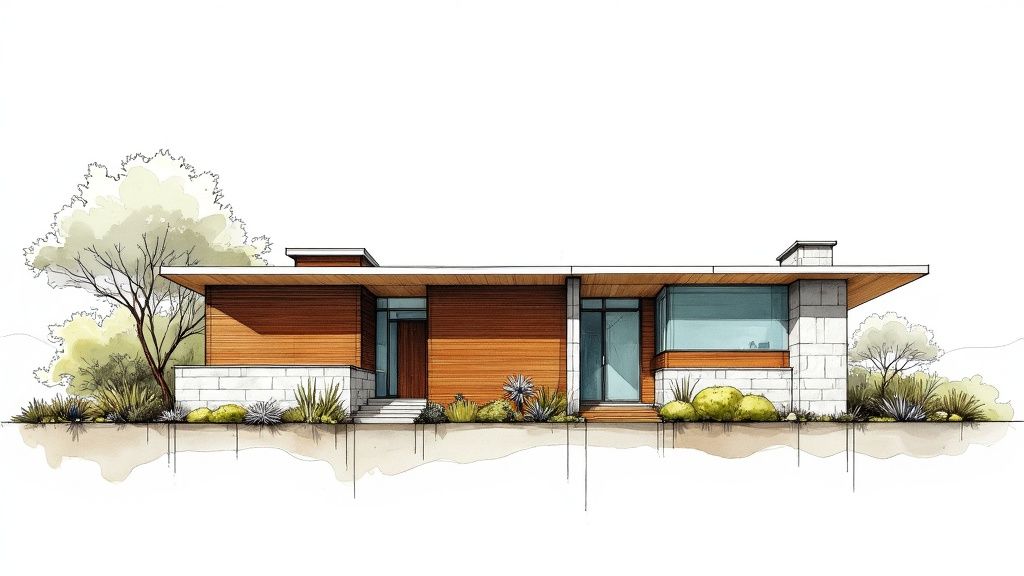
The design philosophy prioritises a connection to the landscape, often featuring large glazed walls, clerestory windows, and sliding doors that open onto patios and gardens. As showcased in the iconic Case Study Houses of Los Angeles, these homes were designed for a new, informal way of life, with open-plan layouts and a focus on functionality. The resulting elevations are dynamic yet understated, harmonising with their natural surroundings.
Strategic Breakdown
-
Indoor-Outdoor Connection: The elevation is designed to dissolve boundaries. Expansive glass panels, courtyards, and accessible outdoor areas are key components that make the home feel larger and more connected to its environment.
-
Horizontal Emphasis: Low-pitched or flat roofs with deep overhangs create strong, grounded horizontal lines. This makes the structure appear to hug the landscape rather than dominate it.
-
Material Richness: A mix of natural materials is crucial. Think warm wood siding, rugged stone feature walls, and large expanses of glass, often combined with modern materials like steel for structural support.
Actionable Takeaways
To capture the essence of a Mid-Century Modern elevation, focus on the relationship between the structure and its site.
Key Insight: The success of a Mid-Century Modern design lies in its thoughtful site integration. The elevation should respond to the topography, views, and solar orientation, using overhangs for shade and glass to frame the landscape.
When modelling in Vibe3D, pay close attention to material textures. Use high-quality wood and stone maps to convey authenticity. For lighting, aim for a soft, natural look that mimics the late afternoon sun, casting long shadows from the roof overhangs and highlighting the interplay of different materials. This approach adds depth and warmth, which is central to the style's appeal. For further inspiration, explore the latest trends in front elevation designs to see how these classic principles are being adapted today.
7. Craftsman/Bungalow Elevation
Born from the Arts and Crafts movement in the early 20th century, the Craftsman/Bungalow house elevation design is a celebration of honest construction, natural materials, and handcrafted detail. This style, popularised by figures like Gustav Stickley, was a reaction against industrialisation, prioritising skilled workmanship over mass production. The result is a warm, inviting façade with a strong connection to the earth, featuring deep porches, low-pitched gable roofs, and exposed structural elements.
The charm of a Craftsman elevation lies in its authenticity and attention to detail. From the tapered porch columns resting on stone piers to the exposed rafter tails under wide eaves, every element is both functional and decorative. Found in historic neighbourhoods from Pasadena, California, to Portland, Oregon, these homes showcase a harmonious blend of wood, stone, and artisan-made components that create a timeless and sturdy appearance.
Strategic Breakdown
-
Structural Articulation: Elements like rafters, brackets, and beams are intentionally exposed, turning the structural system into a primary decorative feature. This honesty in construction is a core tenet of the style.
-
Natural Material Palette: The design relies heavily on natural materials like wood shingles, stone foundations, and stucco. The colour scheme is typically earthy, drawing inspiration from the surrounding landscape.
-
The Welcoming Porch: A deep, covered front porch is a defining characteristic. Supported by substantial, often tapered, columns, it serves as a transitional space between the outdoors and the home's interior, encouraging community interaction.
Actionable Takeaways
To capture the essence of a Craftsman/Bungalow elevation, focus on craftsmanship and the integration of natural elements.
Key Insight: The success of a Craftsman design hinges on the quality of its details. Authenticity is key, so prioritise period-appropriate materials and honour the handcrafted spirit of the original movement, whether restoring an old home or building a new one.
When creating Vibe3D renderings, pay close attention to the texture and grain of the wood, the ruggedness of the stone, and the interplay of light and shadow under the deep eaves. Use warm, soft lighting to enhance the welcoming feel of the porch. For more inspiration, explore our collection of house elevation design photos to study the intricate details that define this beloved architectural style.
8. Contemporary Glass Box Elevation
The contemporary glass box elevation is a bold architectural statement that prioritises transparency, structural ingenuity, and a smooth connection to the outdoors. Taking cues from seminal works like Pierre Chareau's Maison de Verre, this design philosophy employs extensive glazing and slender steel frames to create a structure that feels almost weightless. It is the ultimate expression of modern living, where the barriers between interior and exterior are intentionally blurred.
This style is often seen in high-end residential projects, from luxury homes in Beverly Hills to contemporary estates in Aspen, where maximising views is paramount. The design relies heavily on advanced engineering to minimise visible supports, creating dramatic cantilevers and expansive, uninterrupted glass walls. The result is an ethereal and sophisticated façade that appears to float within its landscape.
Strategic Breakdown
-
Structural Expressionism: The building's frame, often made of steel or specialised timber, is not hidden but celebrated as a key design element. This creates a rhythmic, grid-like pattern that gives order to the transparency.
-
Maximal Glazing: Floor-to-ceiling glass panels are the primary cladding material. This approach demands high-performance, triple-glazed units with specialised coatings to manage thermal gain and UV exposure.
-
Material Contrast: The cool, reflective nature of glass is often balanced with solid, opaque elements like stone, concrete, or wood. These materials are used strategically to anchor the structure, house services, and provide necessary privacy.
Actionable Takeaways
Successfully executing a glass box elevation requires a significant investment in technology and engineering.
Key Insight: The success of a glass box design hinges on balancing extreme transparency with liveability. Privacy, thermal comfort, and structural integrity must be meticulously planned from the outset.
When designing, integrate sophisticated privacy solutions like smart glass, automated blinds, or strategically placed screening elements. Work closely with structural engineers to achieve the desired minimalist frame. In your Vibe3D models, focus on realistic glass reflections and refractions. Use interior lighting to turn the house into a glowing lantern at night, showcasing the structure's transparency and highlighting the interior architecture as part of the overall elevation design.
9. Transitional Design Elevation
Transitional house elevation designs offer a graceful bridge between classic architectural principles and contemporary sensibilities. This hybrid style thoughtfully blends the warmth and comfort of traditional design with the clean profiles and minimalist ethos of modern aesthetics. It avoids the ornate details of purely classical homes and the stark austerity of some modern designs, resulting in a look that is both timeless and current. The goal is to create a balanced, sophisticated façade that feels both familiar and fresh.
This approach is highly sought after in established neighbourhoods where new construction must respect the surrounding character while still feeling modern. By using traditional forms like gabled roofs or classic window proportions and pairing them with contemporary materials and a neutral colour palette, these elevations achieve a harmonious and enduring appeal. It's a design language that speaks of quiet confidence and refined taste.
Strategic Breakdown
-
Balanced Forms: Traditional symmetrical layouts and rooflines are often simplified. Details like mouldings or window frames are present but have cleaner, less ornate profiles.
-
Neutral Colour Palette: The exterior typically relies on a sophisticated palette of neutrals like greys, beiges, and whites. Texture is introduced through materials like stone, brick, or wood cladding rather than bold colours.
-
Modern Material Integration: Classic materials are combined with modern ones. For example, a traditional brick base might be paired with large expanses of glass and sleek metal roofing or window frames, creating a subtle, pleasing contrast.
Actionable Takeaways
To execute a successful transitional design, the key is balance, not just a random mix of styles.
Key Insight: The success of a transitional elevation lies in its curation. Every element, whether traditional or modern, must be chosen to complement the others, creating a cohesive and intentional visual narrative.
When designing, establish a dominant style and use elements from the other as accents. For example, start with a classic gabled form and introduce modern windows and a minimalist porch. A consistent material and colour palette will unify the disparate elements. For your Vibe3D models, focus on subtle textural contrasts. Use soft, diffused lighting to highlight the interplay between smooth modern surfaces and rustic traditional materials, showcasing the design's sophisticated character. This refined approach to architectural elevation design is what makes the transitional style so appealing.
10. Sustainable/Green Building Elevation
Sustainable house elevation designs are a direct response to our growing environmental consciousness, prioritising energy efficiency, renewable materials, and a harmonious relationship with the natural world. This architectural philosophy goes beyond aesthetics, embedding performance and ecological responsibility into the very fabric of the building's façade. Popularised by standards like Passive House and LEED, this approach integrates features like solar panels, green roofs, and materials that are recycled or locally sourced.
The goal is to create a structure that minimises its carbon footprint while maximising occupant health and comfort. These elevations often tell a story of their environment, using locally appropriate strategies like large overhangs for shade in hot climates or triple-glazed windows for insulation in cold regions. This results in a design that is not only beautiful but also intelligent and deeply connected to its location.
Strategic Breakdown
-
Performance-Driven Form: The building's shape and orientation are dictated by climate. This includes optimising solar gain in winter and using shading devices to prevent overheating in summer.
-
Integrated Renewable Energy: Features like photovoltaic panels are not just added on; they are designed as integral architectural elements, influencing roof lines and façade composition.
-
Living Elements: Green roofs and living walls serve multiple functions. They provide insulation, manage stormwater runoff, improve air quality, and create a visually dynamic façade that changes with the seasons.
Actionable Takeaways
To effectively design a sustainable elevation, performance must be modelled from the very beginning.
Key Insight: True sustainability is not an add-on. The most impactful decisions, such as building orientation, window placement, and insulation levels, must be made during the initial design phase, not as an afterthought.
When designing, prioritise passive strategies like natural ventilation and daylighting before relying on active mechanical systems. Choose materials based on their lifecycle assessment, considering their embodied carbon and recyclability. Within your Vibe3D models, accurately represent these materials and use the software's lighting tools to simulate solar paths at different times of the year. This helps validate your passive design strategies and clearly communicates the project's green features to clients. You can learn more about creating impactful elevations in architecture to better present these sustainable elements.
10-Style House Elevation Comparison
| Style | 🔄 Implementation complexity | ⚡ Resource requirements | ⭐ Expected outcomes | 📊 Ideal use cases | 💡 Key advantages / tips |
|---|---|---|---|---|---|
| Modern Minimalist Elevation | Low–Medium: straightforward geometry but requires precision finishes | Medium: glass, steel, concrete; quality finishes | Clean, timeless aesthetic with high daylight potential | Urban/suburban new builds; modern renovations | Use negative space and quality materials; balance windows with privacy solutions |
| Traditional Colonial Elevation | Medium–High: classical proportions and detailed trim work | High: masonry, hardwood, skilled trades | Formal, reputable appearance with strong resale value | Established neighborhoods, historic contexts | Maintain authentic proportions; invest in quality trim and masonry |
| Contemporary Farmhouse Elevation | Medium: blends rustic and modern detailing | Medium: mixed materials, metal roofing specialists | Popular, characterful look with good market appeal | Suburban/rural homes; lifestyle-focused markets | Balance rustic and modern elements; use quality metal roofing and layered textures |
| Mediterranean Revival Elevation | High: complex forms, arches and ornamental detailing | Very High: stucco, clay tiles, specialist contractors | Luxurious, warm aesthetic well suited to warm climates | Coastal/warm-climate luxury developments | Source authentic materials; hire experienced architects; ensure proper drainage |
| Industrial Loft Elevation | Low–Medium: exposes structure—less finish work but requires structural adaptation | Low–Medium: raw materials; may need structural retrofit | Authentic urban character; flexible commercial/residential potential | Urban conversions, creative live/work spaces | Embrace authenticity; maximize glazing; add livability upgrades without over-finishing |
| Mid-Century Modern Elevation | Medium: bespoke integrations and site-specific detailing | Medium–High: wood, stone, expansive glazing; skilled restoration | Timeless modern aesthetic with strong indoor–outdoor connection | Modernist sites, restorations, suburban retreats | Preserve original details; discreetly update systems; manage privacy and energy |
| Craftsman/Bungalow Elevation | High: intricate handcrafted elements and joinery | High: skilled carpentry, quality natural materials | Warm, high-craftsmanship appearance with strong neighborhood value | Historic districts, preservation-minded communities | Restore rather than replace; document originals; source period-appropriate materials |
| Contemporary Glass Box Elevation | Very High: engineered glazing, cantilevers, specialized structure | Very High: premium glazing, structural engineers, specialist contractors | Dramatic transparency and views; high luxury impact but energy/privacy challenges | High-end sites with views; luxury modern portfolios | Invest in high-performance glass, advanced HVAC, and privacy strategies |
| Transitional Design Elevation | Medium: requires careful stylistic balance | Medium: mixed traditional and modern materials | Broad market appeal; timeless if well-balanced | Suburbs, developments bridging traditional and contemporary contexts | Define a clear architectural language early; use a consistent palette |
| Sustainable/Green Building Elevation | High: integrated systems, performance modeling required | Medium–High: renewables, high-performance envelope, specialist consultants | Reduced operating costs, improved health, incentives and market differentiation | Net-zero aspirations, eco-developments, climate-conscious markets | Integrate sustainability from project start; model energy performance; prioritize passive strategies |
Bringing Your Vision to Life: From Elevation Design to Photorealistic Renders
We have journeyed through a diverse landscape of architectural expression, from the clean lines of Modern Minimalist facades to the intricate details of Traditional Colonial homes and the eco-conscious principles of Sustainable design. Each of the ten house elevation designs we explored tells a unique story, defined by its massing, materials, and relationship with its environment. Yet, across all these styles, a universal truth emerges: a great elevation is more than just an aesthetic choice. It is a carefully orchestrated composition of form and function, a dialogue between the building and its context.
The most critical takeaway is that successful elevation design hinges on a triad of core principles: context, cohesion, and communication. Understanding the site’s climate and topography (context), ensuring a harmonious blend of materials and proportions (cohesion), and clearly conveying the design intent (communication) are the pillars that support an exceptional final structure. Whether you are balancing the horizontal planes of a Mid-Century Modern home or articulating the rustic textures of a Contemporary Farmhouse, these fundamentals remain constant.
Key Insights for Mastering Elevation Design
Let's distill the core strategies discussed throughout this guide into actionable takeaways that you can apply to your next project:
-
Materiality is Narrative: Don't just select materials; use them to tell a story. The raw concrete and exposed steel of an Industrial Loft speak of urban heritage, while the warm timber and local stone of a Craftsman bungalow evoke a sense of grounded authenticity. Your material palette is a primary tool for communicating the design's core concept.
-
Light as a Dynamic Element: Remember that an elevation is never static. Consider how natural light will interact with your chosen forms and textures throughout the day and across seasons. Deep overhangs, strategic fenestration, and textured surfaces can create captivating plays of light and shadow that bring the facade to life.
-
Proportion Over Ornamentation: While details are important, a well-proportioned design will always feel right, even with minimal ornamentation. Focus on achieving a balanced relationship between solid and void, vertical and horizontal elements, and the overall scale of the structure relative to its surroundings.
Use elevation rendering to preview those finish combinations on the actual facade before selecting a direction.
Bridging the Gap Between Concept and Reality
A brilliant design concept can fall flat if it isn't communicated effectively. Traditional 2D elevation drawings, while essential for construction, often fail to convey the emotional and atmospheric quality of a space to clients and stakeholders. This is where the power of photorealistic visualisation becomes indispensable. When moving from concept to reality, tools that help visualize your home's exterior are invaluable. You can effectively design your dream home using a free home exterior visualizer to experiment with different material combinations and colour schemes.
For professional-grade presentations that truly capture your vision, using advanced rendering software is no longer a luxury but a necessity. By translating your 3D models from SketchUp, Revit, or 3ds Max into a platform like Vibe3D, you can create stunning, ultra-realistic renders in minutes. This workflow allows you to test lighting scenarios, experiment with material finishes under different conditions, and find the perfect camera angles to highlight your design's best features. Presenting clients with a 4K image that looks indistinguishable from a photograph eliminates ambiguity, secures faster approvals, and builds confidence. It ensures that the final built form is a true reflection of your meticulously planned house elevation designs.
Ultimately, your ability to design and present a compelling house elevation is what transforms a blueprint into a home. It's the first impression, the public face of your architectural vision, and the element that connects the structure to its inhabitants and its community. By mastering the principles we've discussed and embracing the tools that bring your ideas to life with stunning clarity, you can ensure your designs not only look good on paper but also resonate deeply and endure for years to come.
Frequently Asked Questions
Which House Elevation Style Is Easiest to Build on a Budget?
Industrial Loft and Modern Minimalist elevations tend to be the most budget-friendly of the 10 styles covered here, since our comparison table rates their implementation complexity as "Low-Medium" thanks to exposed structure and simpler finish work. Mediterranean Revival and Contemporary Glass Box sit at the opposite end, requiring "Very High" resource investment for stucco specialists, clay tiles, or engineered glazing.
Do I Need an Architect for a Sustainable or Green Building Elevation?
Yes, sustainable elevation design needs professional input from the earliest planning stage, not as an afterthought. As the guide notes, decisions like building orientation, window placement, and insulation levels have to be made during initial design to hit performance targets tied to standards like Passive House and LEED. A qualified architect or energy modeller helps validate those passive strategies before construction starts.
How Do I Choose Between Traditional and Modern Elevation Styles?
Start with context: Traditional Colonial and Craftsman/Bungalow elevations suit established or historic neighbourhoods where symmetry and handcrafted detail carry strong resale value, while Modern Minimalist and Contemporary Glass Box elevations fit urban or suburban new builds where clean geometry and daylight are the priority. Transitional Design elevations offer a middle path, blending traditional forms like gabled roofs with a modern, neutral material palette.
Why Do My 2D Elevation Drawings Look Different from the Finished Building?
2D elevation drawings are essential for construction, but they can't convey how light, shadow, and material texture will actually read on the finished facade. That's the core reason for translating a 3D model from SketchUp, Revit, or 3ds Max into a photorealistic rendering platform like Vibe3D, which lets you test lighting scenarios and material finishes before a single wall goes up.
Ready to transform your elevation concepts into strikingly realistic visuals? Vibe3D empowers architects and designers to create stunning, 4K renders in seconds, turning your 3D models into powerful communication tools. Explore how you can strengthen your presentations and streamline your workflow at Vibe3D.