The moment you step inside a truly great restaurant, you feel it—that specific, intangible vibe that tells you you're in for a good time. That feeling is anything but an accident. A restaurant's interior is far more than just decoration; it's a powerful business tool that quietly influences how your customers feel, what they decide to order, and whether they’ll be back.
Why you should get interior design done for your restaurant?
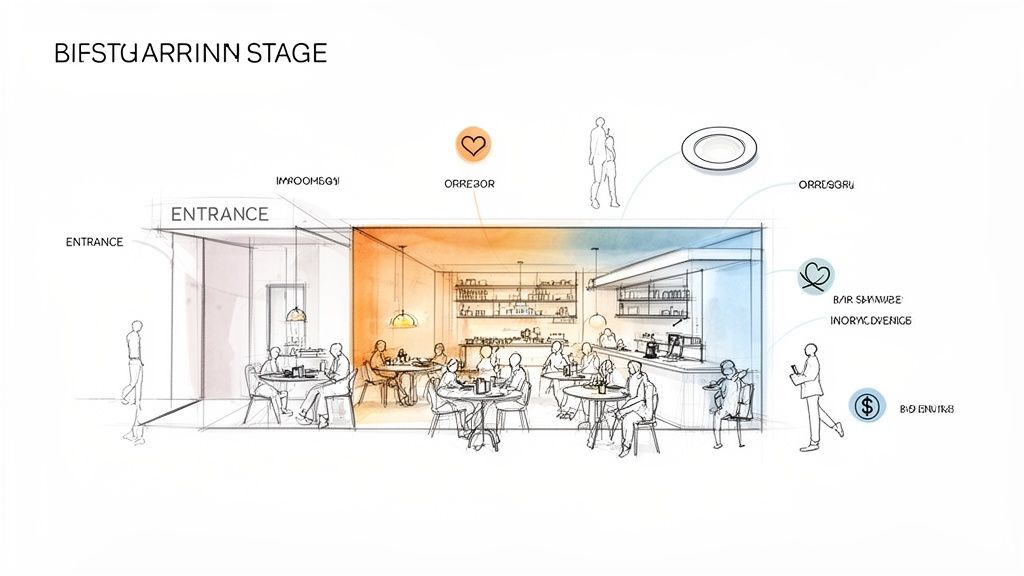
Think of your space as a stage. Every single element, from the way light hits the tables to the arrangement of the seats, works together to tell a story and stir an emotion. Effective restaurants interior design is much more than just picking out nice furniture or a pleasant colour palette. It's about orchestrating a complete experience, one that’s carefully crafted to meet clear business goals.
This guide will walk you through how thoughtful design can directly boost your profits, help you build a base of loyal customers, and cement your brand in the minds of diners. Let's unpack the key ingredients that turn four walls into a thriving success story.
The Foundation of a Memorable Experience
At its heart, restaurant design is about creating an environment that is both functional and atmospheric, perfectly complementing the food you serve. It's a silent communicator, telling guests about your brand's personality, your price point, and who you're for before a single plate even hits the table. A well-designed space makes people feel comfortable and welcome, encouraging them to relax, stay longer, and ultimately spend more.
The ripple effect of good design is massive, touching everything from the efficiency of your staff to how customers perceive your brand. In a crowded market, a unique and inviting interior is often the very thing that makes a diner choose you over the place next door.
Great design is the silent ambassador of your brand. It’s the first handshake, the lasting impression, and the reason customers choose you over the competition next door.
A Growing Market Driven by Experience
The need for expert restaurants interior design is on the rise, particularly as people dine out more often as a social activity. Take India, for instance, where the organised foodservice market is booming thanks to urban growth and a stronger culture of eating out. Major chains are dedicating 8–12% of their initial capital to interior fit-outs alone. They're focused on creating brand-consistent and highly "Instagrammable" spaces designed to catch the eye of the modern diner. This level of investment shows just how valuable a visually stunning environment has become. You can read more on market trends and their impact on design.
Key Pillars of Successful Design
For a restaurant's interior to really work, it needs to nail a few critical elements. If you let one of these slip, the entire customer experience can fall flat.
-
Psychological Comfort: This is all about using colour, lighting, and layout to shape mood and behaviour. The goal is to make guests feel instantly welcome and at ease.
-
Operational Efficiency: A smart floor plan makes a huge difference for your staff. It ensures a smooth flow of service, which cuts down on stress and improves speed, directly boosting the guest experience.
-
Brand Identity: Your physical space must be a living, breathing extension of your brand’s story and values. Every design choice should come together to create a cohesive and unforgettable encounter.
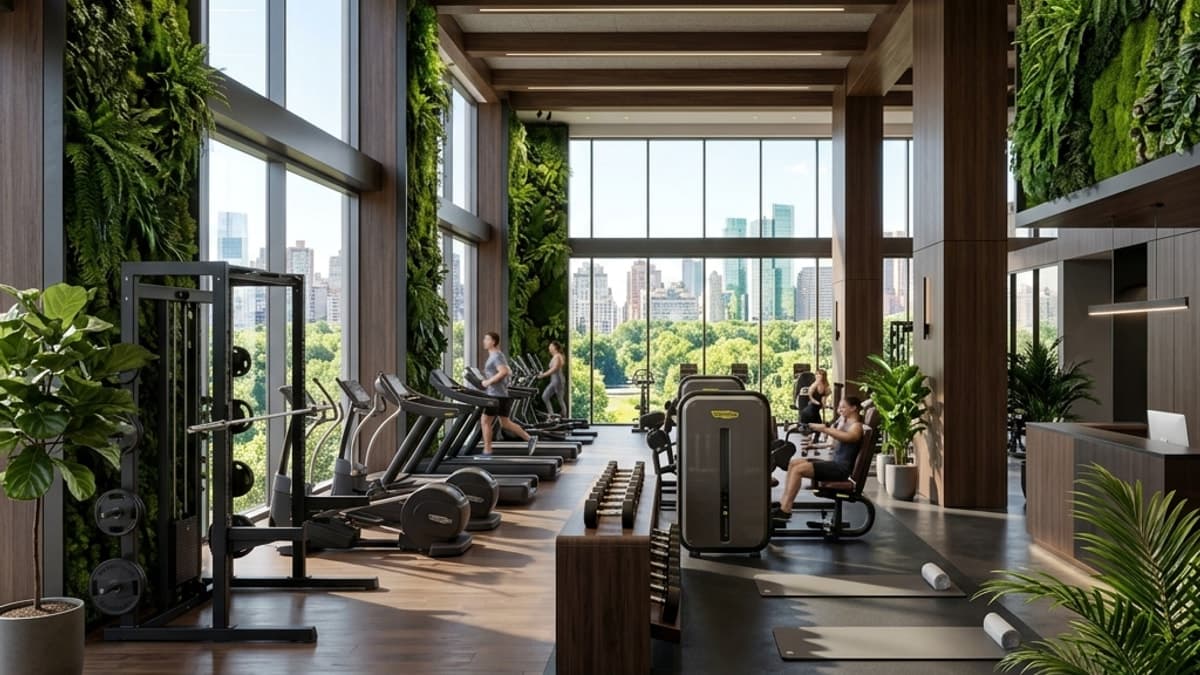
These same three pillars, psychological comfort, operational efficiency, and brand identity, guide experience-driven commercial design well beyond dining, as seen in our roundup of gym interior ideas for wellness-focused spaces.
Designing the Customer Experience
Great restaurants interior design is really about applied psychology. It’s the art of creating an atmosphere that subtly guides how your customers feel and act, making the physical space an essential part of their dining journey. Every detail, from the paint on the walls to the space between tables, becomes a tool for shaping their experience.
Think of your design as a silent host, constantly communicating with your guests. It sets the tone, manages their expectations, and can even nudge their appetite and how long they decide to stay. The aim is simple: create an environment where the atmosphere feels as thoughtfully crafted as the menu.
To pull this off, you need to understand how what people see, hear, and feel translates into an emotional reaction. When you get it right, the design clicks perfectly with your brand and how your restaurant runs, creating a memorable visit that feels effortless for every guest.
The Psychology of Colour and Light
Colour is one of the quickest ways to set a mood. It's a powerful, unspoken language that connects directly with our subconscious. Warm colours like reds, oranges, and yellows are known for being stimulating—they can even kickstart an appetite, which makes them a fantastic choice for energetic, fast-casual spots.
On the other side of the spectrum, cooler tones like blues, greens, and soft purples tend to make people feel calm and relaxed. These colours are perfect for fine-dining restaurants or cosy cafes where you want guests to settle in, unwind, and enjoy a slower, more deliberate meal. The right colour palette helps reinforce the pace and feeling you're aiming for.
Lighting is colour’s partner in crime when it comes to building atmosphere. Bright, even lighting creates a feeling of energy and efficiency, which is just right for a quick-service restaurant. In contrast, soft, layered lighting with warm pools of light fosters a sense of intimacy and class, encouraging guests to stay for a longer, more premium experience.
"A restaurant's interior is a carefully composed set piece. Every choice, from the hue of the walls to the warmth of the lighting, is a directorial decision aimed at evoking a specific feeling and behaviour from the audience—your guests."
Understanding Space and Proximity
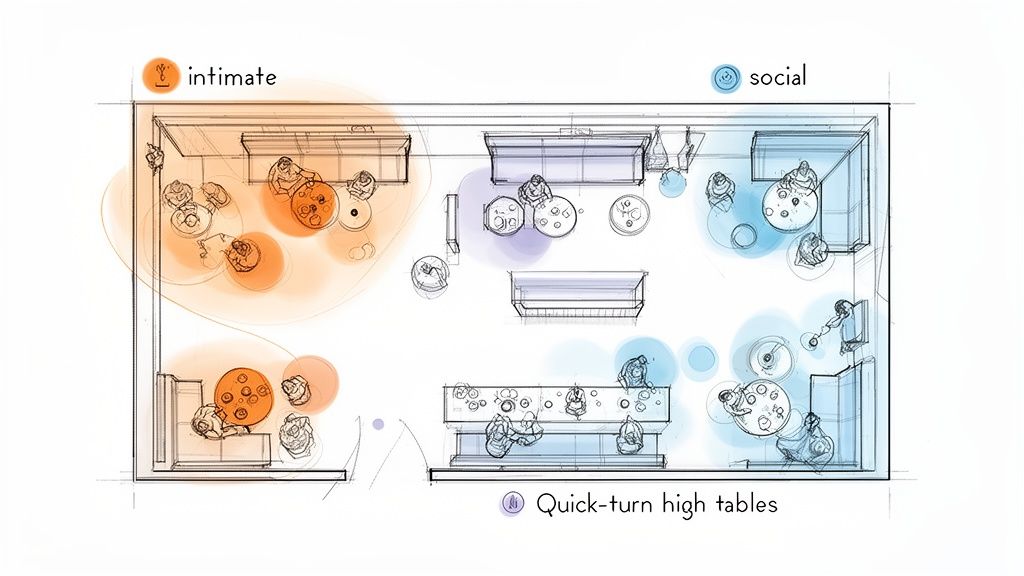
How you arrange your tables and chairs is just as important as the style of the furniture itself. This is where proxemics—the study of how people use space—comes into the picture. The layout directly influences how comfortable your guests feel, how they interact, and even how quickly you can turn tables.
A fine-dining spot, for instance, will use generous spacing between tables to create an intimate, exclusive atmosphere. This gives diners a sense of having their own private bubble, adding to the feeling of luxury and allowing for quiet, personal conversations.
On the flip side, a buzzing urban cafe or a fast-casual eatery often thrives with closer seating and communal tables. This kind of layout generates a social, energetic vibe. It also sends a subtle message that it’s a place for a quicker visit, which naturally helps increase table turnover during peak hours.
A smart layout often has a mix of these three zones:
-
Intimate Zones: Tucked-away booths and well-spaced tables for couples or quiet meals.
-
Social Zones: Larger tables and more open areas that get groups talking and add to a lively atmosphere.
-
Transitional Zones: High-top tables or bar seating perfect for solo diners or quick stops, encouraging faster turnover.
By planning your layout with these different needs in mind, you can guide the flow and cater to every type of customer. Once you’ve got a handle on these foundational ideas, you can start mapping out your vision by creating a focused interior design concept sheet.
Mastering Your Restaurant's Layout and Flow
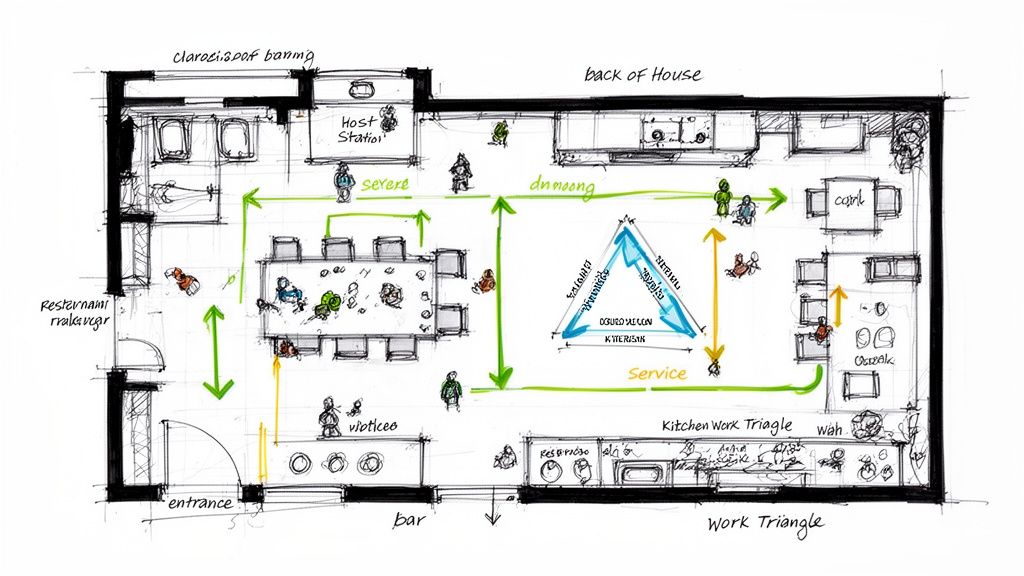
While atmosphere creates the mood, your restaurant's layout dictates its entire rhythm. A well-planned floor plan is the invisible engine that keeps both staff and guests happy. It's the practical science of arranging your space so every movement—from a server delivering a hot plate to a guest finding the restroom—is simple and logical.
Think of it like a city grid. When the streets are clear and the routes are direct, traffic just flows. The same idea applies here. A smart layout cuts down on chaos and staff fatigue, which ultimately adds up to a much better experience for everyone who walks through your door.
Defining Your Key Functional Zones
Every single restaurant, no matter the size or style, is made up of distinct zones. The real success of your restaurants interior design comes down to how well these areas are defined and connected. Each zone has a job to do, and the way they work together sets the operational pulse of your business.
-
The Entrance and Waiting Area: This is your first handshake. It needs to be welcoming, clearly guide guests, and offer a comfortable, organised spot for anyone waiting, so you don't end up with an awkward huddle at the door.
-
The Dining Area: As the heart of the guest experience, this space has to strike a tricky balance between fitting in enough seats and giving people enough comfort and privacy.
-
The Bar: This is both a social hub and a profit centre. The bar needs enough room for patrons to sit comfortably and for bartenders to work efficiently without bumping into people.
-
Restrooms: They should be easy to find but tucked away discreetly. The last thing you want is a restroom door opening directly into the main dining area's line of sight.
-
Back-of-House (BOH): This covers the kitchen, storage, and staff areas. Its layout is absolutely critical for the speed, safety, and efficiency of your entire service.
Engineering an Effortless Workflow
A smooth workflow is what we're all aiming for in restaurant layout planning. It's about carving out clear, open pathways for staff and guests to move through the space without tripping over each other. When the flow is off, service slows, mistakes creep in, and morale takes a nosedive for both your team and your customers.
One of the oldest tricks in the book for kitchen design is the kitchen work triangle. This principle organises the three main work areas—the stove, the sink, and the fridge—into a tight, efficient triangle. This simple setup minimises the steps a chef has to take, saving precious time and energy during a hectic service.
But that same logic needs to extend beyond the kitchen. The paths from the kitchen to the dining tables must be wide and direct. You have to avoid creating tight corners or bottlenecks where staff could collide. The journey a guest takes from the entrance to their table, and later to the restroom, should feel just as intuitive. If you're working with a smaller footprint, you'll need to be clever with your choices, so it’s worth looking into guides on choosing dining room furniture for small spaces to make every inch count.
A great layout isn't just about placing tables; it's about choreographing movement. The goal is to create an environment where service feels like a graceful dance, not a chaotic scramble.
Balancing Capacity and Comfort
It’s a classic dilemma in restaurants interior design: the temptation to cram in as many tables as possible to boost revenue. More often than not, this backfires. Overcrowding creates a noisy, uncomfortable space that makes people think twice about coming back. The real art is finding that sweet spot where you have enough seats to be profitable without ruining the guest experience.
A good rule of thumb is to allow around 1.5 to 2 square metres per diner for a full-service restaurant. This gives everyone enough room for seating, aisles, and service stations. Visualising this is where modern tools really come into their own. For example, using 3D rendering for interior design lets you test drive different layouts virtually before you commit to moving a single table. By creating realistic digital mockups, you can "walk" through the space from both a guest's and a server's perspective, making sure your final design is both profitable and genuinely pleasant.
Bringing Your Brand to Life Through Design
Your restaurant's interior is your most powerful and immersive branding tool. It's the place where your story stops being just a logo or a menu and becomes a real, three-dimensional experience that people can touch, see, and feel. The goal here is to weave your brand’s personality, its core values, and its unique message into every single design choice—from the texture of the tables to the style of the chairs.
This is all about creating a cohesive world that draws guests in from the moment they step through the door. Every element should feel deliberate, working together to show people who you are and what you're all about. When branding is baked into the very fabric of your space, customers don't just have a meal; they step inside your brand.
Translating Brand Identity into Physical Space
Think of your brand identity as the script for a play, and your interior design as the full stage production. The script gives you the story, the characters, and the dialogue, but it’s the set design, the props, and the lighting that truly bring that story to life for the audience. The very same idea applies to restaurant interior design.
A rustic pizzeria, for instance, tells its story with rough-hewn wood, exposed brick, and warm, moody lighting. Its brand is all about tradition, authenticity, and comfort. Every material choice backs up that narrative. On the other hand, a minimalist sushi bar might use sleek lines, natural stone, and a cool, muted colour palette to communicate precision, freshness, and modern elegance.
"Your interior design is not just a backdrop; it's an active participant in your brand's story. It should speak the same language as your menu, your service, and your marketing, creating a unified and memorable experience for every guest."
The trick is to break down your brand into sensory cues. Ask yourself a few key questions:
-
What does our brand feel like? Is it warm and cosy, or is it cool and sophisticated? Pick textures and materials that evoke that feeling.
-
What colours capture our brand's personality? Are you energetic and bold, or calm and refined? Your colour palette should be a direct reflection of this.
-
What story are we telling? A farm-to-table concept needs to feel earthy and natural. A futuristic cocktail bar should feel sleek and innovative.
Creating a Cohesive Design Narrative
Consistency is what separates a good design from a truly great one. A cohesive narrative means that every single detail, no matter how small, aligns perfectly with your brand. This stretches from the big architectural features all the way down to the smallest functional elements.
Imagine the entire customer journey. The story begins the moment they see your building from the street, so making sure your interior and restaurant exterior design work together is essential for a powerful first impression. Once inside, the narrative continues with the design of the menus, the style of the staff uniforms, and even the music you play. When all these pieces are in sync, the brand experience feels complete and really connects with people.
This isn't just about looking good; it has a real, measurable impact on business. In Indian restaurants, for example, focused design updates aimed at improving the customer experience led to some serious gains. Operators reported an average increase in customer dwell time of 12–25% and a lift in revenue between 8–18%. What's more, refreshed interiors often led to better online reviews, driving new customer traffic by up to 15%. You can dig deeper into how design drives revenue in recent industry trend reports.
To better understand how these elements work in practice, let's look at a quick comparison.
Design Element Impact On Brand And Customer Experience
| Design Element | Brand Identity Example (E.g., Rustic Farm-to-Table) | Brand Identity Example (E.g., Modern Urban Bistro) | Impact on Customer Experience |
|---|---|---|---|
| Colour Palette | Earthy tones: greens, browns, warm neutrals. | Monochromatic scheme: greys, whites, blacks with a bold accent colour. | Colours set the mood. Earthy tones feel calming and natural, while bold schemes feel energetic and contemporary. |
| Materials | Reclaimed wood, exposed brick, wrought iron, linen. | Polished concrete, stainless steel, glass, leather. | Textures create a tactile experience. Rustic materials feel authentic and cosy; sleek materials feel clean and sophisticated. |
| Furniture | Mismatched wooden chairs, large communal tables. | Minimalist, custom-designed seating with clean lines. | Furniture dictates comfort and social interaction. Communal tables encourage a social vibe; structured seating feels more intimate. |
| Lighting | Warm, dim lighting with vintage-style filament bulbs. | Bright, focused track lighting and sculptural pendant lights. | Lighting guides the eye and defines the atmosphere. Dim light is intimate and relaxed; bright light is vibrant and energising. |
As you can see, every choice sends a specific message, shaping how guests perceive your brand and feel within the space.
Material Choices That Tell a Story
The materials you select are your primary storytellers. They communicate meaning through texture, colour, and the associations people already have with them.
-
Wood: This is incredibly versatile. Dark, polished mahogany can communicate warmth and tradition, while reclaimed barn wood immediately gives off a rustic, casual charm.
-
Metal: Metal can feel industrial and edgy, like raw steel, or it can feel luxurious and modern, like brushed brass or copper accents.
-
Stone: Using materials like slate, marble, or granite conveys a sense of permanence and nature, adding a touch of elegance or earthiness depending on the finish.
-
Fabrics: Upholstery and other textiles are what soften a space and add a layer of comfort. Rich velvet can suggest opulence, while a simple linen feels casual and breezy.
By carefully choosing and combining these materials, you create a rich, layered environment that communicates your brand's identity without you ever having to say a word. This is exactly how a physical space starts to build a genuine emotional connection with your guests.
3. Setting the Mood with Lighting, Materials, and Sound
While your layout and brand create the skeleton of your restaurant's story, the sensory details are what give it a soul. Lighting, materials, and sound are the invisible forces that shape the atmosphere, turning a functional room into a place people remember. Getting these right is a massive part of restaurant interior design, as they all work in concert to control the mood, comfort, and even the pace of a meal.
Think of yourself as a director setting a scene. The lighting sets the emotional tone and draws the eye. The materials provide the texture and backdrop. And the sound design completes the world you're trying to build. When these three powerful elements are in harmony, you get a design that truly connects with guests long after they've paid the bill.
Crafting Atmosphere with Layered Lighting
In a restaurant, lighting is so much more than just being able to see. It’s a powerful tool for sculpting the entire environment. Any well-lit space uses what we call layered lighting, which is just a simple way of saying it combines three different types of light to create depth, function, and just the right vibe.
-
Ambient Lighting: This is your foundation. It's the general, overall light that fills the room and sets the base level of brightness. This is what decides if the room feels bright and buzzy or dim and intimate.
-
Task Lighting: This is practical, focused light aimed at specific spots where people are doing things. Think of a small spotlight over a table so diners can actually read the menu, or bright, clear light over the bar where your team is working.
-
Accent Lighting: This is where the drama comes in. You use accent lighting to highlight cool architectural details, artwork, or feature walls. It creates visual interest and tells people where to look. It’s the light that makes your design elements pop.
By carefully balancing these three layers, you create a space that’s dynamic and comfortable on the eyes. The right lighting design can completely transform a venue and set a mood—something every restaurant needs.
Choosing Materials That Speak Volumes
The materials you pick for your restaurant do more than just look good; they tell a story through sight and touch. Every single surface—from the floor under your feet to the tabletop where a guest rests their hands—adds to the overall feeling of the space. The real skill is finding that sweet spot between aesthetics, durability, and what your budget can handle.
You're always dealing with trade-offs. A beautiful reclaimed wood floor adds incredible warmth and character, but it's going to need more upkeep than a tough porcelain tile. Velvet seating feels wonderfully luxurious and inviting, but it's probably a terrible choice for a high-traffic family spot where spills are a daily event.
Materials are the vocabulary of your design. A polished marble bar speaks of sophistication, while a rough-hewn wooden beam tells a story of rustic authenticity. Choose your words carefully to ensure your space communicates the right message.
The aim is to select materials that not only fit your brand identity but can also take the punishment of a busy commercial environment. This is where getting a good visual early on pays off. Tools that support detailed work with 3ds Max for interior design let you play with different material combinations in a virtual space, helping you see how textures and finishes work together before you spend a single pound on the real thing.
Mastering the Art of Restaurant Acoustics
Sound is probably the most overlooked element in restaurant interior design, and yet it has a huge impact on whether your guests feel comfortable. A restaurant that’s too loud is just stressful, and it can drive people away for good. On the flip side, a place that's dead silent can feel awkward and sterile. The goal is to hit that perfect middle ground: a comfortable, energetic buzz where noise never becomes overwhelming.
Good acoustic design starts with smart material choices. Hard, reflective surfaces like glass, concrete, and tile are the enemy—they just bounce sound waves all over the room, making everything louder. To fight this, you need to bring in materials that absorb sound.
Here are a few practical ways to do it:
-
Soft Furnishings: Upholstered booths, thick curtains, and area rugs are fantastic for soaking up noise.
-
Acoustic Panels: These have come a long way. Modern acoustic panels can be disguised as art or blended discreetly into your wall and ceiling designs.
-
Ceiling Treatments: Dropped ceilings, baffles, or even suspended "clouds" made of acoustic materials can dramatically cut down on echo and clatter.
-
Smart Layout: You can break up a big, open dining room with partitions, different levels, or even large plants. This helps diffuse sound and create quieter, more intimate pockets.
By thinking about the acoustics from the start, you make sure conversation can flow easily and the atmosphere stays vibrant without being exhausting for your guests and staff.
Planning Your Restaurant Design Project and Budget
Alright, let's talk about turning your design dream into a real, physical space. This is where the creative vision meets the hard reality of planning and budgeting. It might not be the most glamorous part of the job, but getting this right is what makes a successful restaurants interior design project possible. A solid plan is your best defence against blown budgets and painful delays.
Think of your budget as the financial blueprint for the entire project. You have to account for everything—and I mean everything—from the big-ticket equipment down to the last light switch. If you miss something, it can throw the whole timeline into chaos.
Breaking Down the Costs
The first thing you need is a detailed, line-by-line budget. Breaking it down into clear categories is the only way to make sure nothing slips through the cracks. While no two projects are identical, the major cost centres are usually pretty consistent.
Here’s a typical way to slice it up:
-
Design and Professional Fees: This is for your architect, interior designer, and any engineers you need on board.
-
Construction and Labour: Covers all the heavy lifting—demolition, plumbing, electrical work, and any structural changes.
-
Furniture, Fixtures, and Equipment (FF&E): This bucket holds everything from the tables and chairs to kitchen gear and lighting fixtures.
-
Decor and Finishes: Think paint, flooring, wall treatments, and all the final decorative touches that bring the space to life.
-
Contingency Fund: This is absolutely non-negotiable. You must set aside 10-15% of your total budget for the unexpected problems that always crop up.
Here in India, the costs can swing wildly depending on what you're building. A small quick-service spot might run you anywhere from ₹6,00,000 to ₹25,00,000. For a larger casual dining restaurant, you could be looking at ₹25 lakh to ₹1 crore. With labour alone often accounting for 25–40% of the total cost, you have to manage every rupee carefully. For more specific regional data, it's worth checking out resources like the interior design services market on mordorintelligence.com.
Mapping Out the Project Timeline
A realistic timeline is just as critical as your budget. It’s what keeps the entire team aligned and moving forward. In India, a small project might take 6–10 weeks, while a mid-sized restaurant could stretch from 12–20 weeks. But honestly? Delays happen.
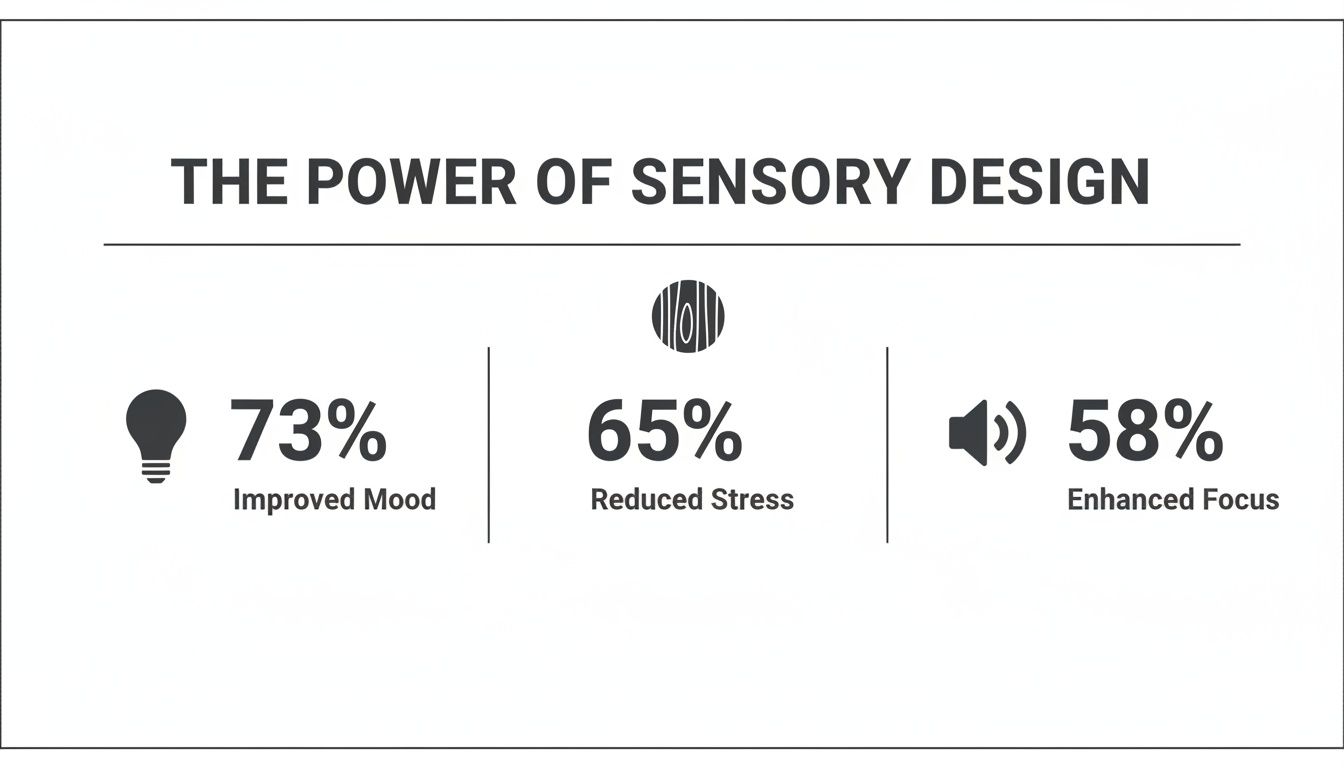
As this infographic shows, sensory elements like lighting, materials, and sound are at the heart of your design. Each of these involves sourcing, delivery, and installation, all of which need to be factored into your schedule from day one.
The trick is to anticipate the common roadblocks. Permitting can be a nightmare, and supply chain issues are a constant headache. That's why building some buffer time into your schedule is essential—it gives you the breathing room to handle problems without derailing the whole project.
This is also where clear visuals become a massive help. Using tools like the best architectural rendering software allows everyone—from the client to the contractor—to see the final vision. When everyone is on the same page, decisions get made faster, and reviews are much more straightforward.
Frequently Asked Questions About Restaurant Interior Design
When you're starting a new restaurant project, the questions can pile up quickly, especially around the design. Let's tackle some of the most common ones you're likely asking, with straightforward answers to guide you from that first napkin sketch to your grand opening night.
So, How Much Does Restaurant Interior Design Actually Cost?
This is the big one, isn't it? The honest answer is: it depends. For a small, quick-service spot in India, you could be looking at a fit-out cost anywhere from ₹6,00,000 to ₹25,00,000. If you're planning a larger, full-service restaurant, that budget can easily jump from ₹25 lakh to well over ₹1 crore.
What drives these numbers? It boils down to a few key things:
-
Size and Location: A sprawling restaurant in a prime metro location is a completely different financial ballgame than a cosy café in a smaller city.
-
Scope of Work: Are we just talking about a cosmetic facelift with new paint and furniture? Or are you gutting the place and redoing the plumbing and electrical from scratch?
-
Material Quality: There's a world of difference between standard fixtures and custom-built furniture or high-end finishes like marble and imported tiling. Your choices here will have a huge impact on the final bill.
-
Labour and Fees: Don't forget the professionals. Fees for your designers and architects, plus the cost of skilled tradespeople, are a significant slice of the budget.
A good rule of thumb is to set aside 8-12% of your total start-up capital just for the interior fit-out. And whatever you do, build a 10-15% contingency fund into your budget. Trust me, unexpected costs always pop up.
What’s a Realistic Timeline for Design and Construction?
Good design can't be rushed. For a smaller-scale project, you can realistically expect the work to take 6 to 10 weeks from the day construction starts. For a more complex, mid-sized restaurant, you're probably looking at 12 to 20 weeks.
But—and this is a big but—you have to plan for delays. Getting permits approved, dealing with supply chain hiccups, or discovering a surprise structural issue can easily add 20-40% more time to your schedule. A detailed project plan with some buffer time built in is your best defence against timeline stress.
How Do I Know If My New Design Is Actually Working?
Measuring the return on your design investment goes way beyond just liking how the place looks. A truly successful restaurants interior design should make a real, measurable difference to your business.
A restaurant's design is a direct investment in the customer experience. Its success can be measured not only in increased revenue but also in improved staff efficiency, higher customer satisfaction, and a stronger brand presence that keeps people talking.
To see if it's paying off, start tracking these key metrics before and after the renovation:
-
Revenue and Average Spend: Are your daily and weekly sales numbers climbing? Are customers spending more on average each time they visit?
-
Table Turnover: If you're a fast-casual joint, does the new layout help you serve more people during your busiest hours?
-
Dwell Time: For fine dining, are guests lingering longer? Are they ordering that extra course or another round of drinks because they're comfortable and enjoying the atmosphere?
-
Online Buzz: Keep an eye on your reviews and social media. An increase in positive feedback and people snapping and sharing photos of your space is a fantastic sign. A beautiful design often becomes its own best marketing tool.
Ready to bring your restaurant design to life with stunning, photorealistic visuals? Vibe3D turns your 3D models into client-ready renders in seconds, cutting down review times and helping you make decisions faster. Explore how our AI-powered platform can perfect your next project at vibe3d.ai.