In a competitive wellness market, a gym's success hinges on more than just its equipment. The interior design sets the tone, motivates members, and builds a powerful brand identity. For professional designers, mastering gym interior ideas means blending functionality with atmosphere, creating spaces that are not only practical for training but also inspiring destinations for health and community. This roundup moves beyond generic advice to explore ten distinct, actionable design concepts that cater to diverse client needs and modern member expectations.
From the raw energy of industrial minimalism to the serene focus of a biophilic wellness hub, each idea offers a blueprint for creating memorable and effective fitness environments. To enhance these spaces with dedicated wellness zones, exploring inspiring home sauna room ideas can provide unique layouts for personal sanctuaries. We will explore specific materials, colour schemes, and lighting strategies, providing the detailed insights needed to bring these visions to life with precision and creativity. This guide is organised to help you transform any fitness space into a destination that champions both performance and well-being.
1. Industrial Minimalist Design
The industrial minimalist aesthetic strips a gym back to its raw, functional essence, creating an environment that feels both edgy and motivating. This approach champions authenticity by showcasing a building's structural soul. It combines exposed brickwork, polished concrete floors, visible ducting, and solid steel fixtures to cultivate a no-nonsense atmosphere. The philosophy is simple: remove distractions and let the equipment and the workout take centre stage, a key reason it’s one of the most enduring gym interior ideas.
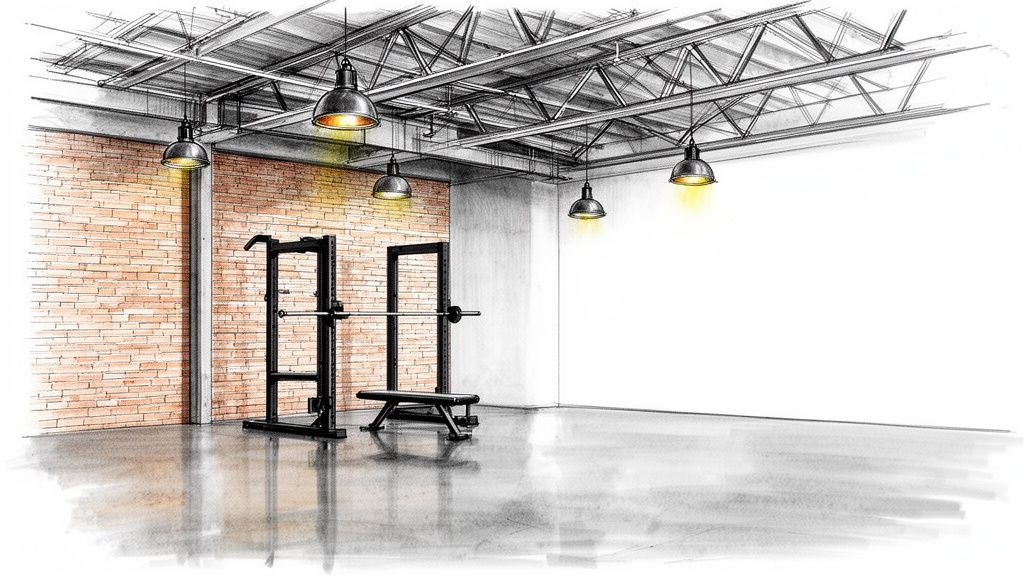
This design is particularly effective for high-intensity training spaces, as seen in many Barry's Bootcamp locations and CrossFit boxes across North America. The raw aesthetic communicates strength and resilience, which mentally prepares members for a challenging session. Its focus on open space and clean lines also enhances functionality, allowing for flexible equipment layouts and clear circulation paths.
How to Implement This Design
To successfully execute an industrial minimalist interior, focus on the interplay between materials, light, and space.
-
Material Honesty: Prioritise authentic materials. If original brick isn't available, use high-quality brick slips. Polish existing concrete floors rather than covering them. Use galvanised steel for fixtures and handrails.
-
Strategic Lighting: Combine ambient and task lighting. Large pendant lights can highlight key zones like lifting platforms, while track lighting can illuminate circulation paths without cluttering the ceiling.
-
Accent with Colour: Use a neutral palette of greys, blacks, and whites as the base. Introduce a single, bold accent colour, often from the brand’s identity, on select walls or equipment to create visual interest and energy.
Key Insight: The success of industrial design hinges on balance. It must feel rugged and authentic without appearing neglected or cold. High-quality finishes on raw materials are essential.
Visualisation tools are invaluable for perfecting this balance. For a deeper understanding of how this style fits into broader trends, you can explore more about these architectural design concepts. Using a platform like Vibe3D allows you to test material finishes and simulate lighting scenarios, ensuring the space feels energising, not dingy, before construction begins.
2. Bright, Modern Wellness Hub Design
The modern wellness hub design transforms a gym into a sanctuary for holistic health, moving beyond traditional fitness to encompass mental and spiritual well-being. This concept prioritises light, nature, and tranquility, using clean lines, a bright colour palette, and premium, natural materials. It creates an inviting, restorative atmosphere where members can de-stress and refocus. The goal is to design a complete wellness journey, making it one of the most aspirational gym interior ideas for today's health-conscious market.
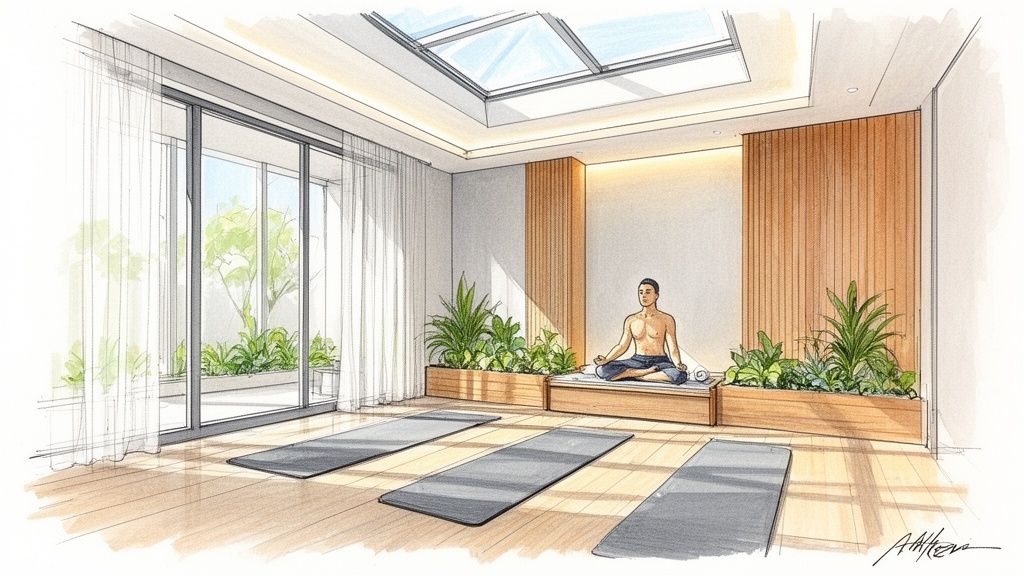
This approach is masterfully executed by brands like Alo Moves and Pure Yoga, which integrate dedicated zones for yoga, meditation, and recovery. The design's emphasis on natural light and biophilic elements fosters a connection to nature, which is proven to reduce stress and improve mood. It appeals to a demographic seeking a premium, all-encompassing health experience that includes amenities like saunas, cold plunge pools, and tranquil lounges.
How to Implement This Design
To create an effective wellness hub, the design must feel cohesive, calming, and effortlessly luxurious.
-
Maximise Natural Light: Use large windows, skylights, and glass partitions to flood the space with daylight. Keep window treatments minimal to avoid obstructing views and light.
-
Biophilic Integration: Incorporate natural elements such as living green walls, indoor planters with low-maintenance plants, and water features. Use materials like light-toned wood, bamboo, and natural stone.
-
Zoned Experiences: Clearly define areas for different activities. Use subtle shifts in flooring, lighting, and colour palettes to transition from high-energy workout zones to serene recovery and meditation spaces.
Key Insight: The essence of a wellness hub is its smooth blend of function and serenity. Every design choice, from the texture of the floor to the scent in the air, should contribute to a calming and rejuvenating member experience.
Achieving this atmosphere requires careful planning. Using advanced architectural rendering software allows designers to simulate natural light at different times of day and test how material reflectivity affects the space's ambiance. This ensures the final environment is bright and uplifting without creating uncomfortable glare, perfecting the balance between energy and peace.
3. High-Tech Smart Gym Integration
The high-tech smart gym integrates cutting-edge technology directly into the physical environment, creating a data-driven and immersive workout experience. This design concept moves beyond traditional equipment by incorporating IoT-enabled machines, interactive smart mirrors, and large-format digital displays. Members can track performance metrics in real-time, access virtual classes on demand, and receive personalised feedback, transforming the gym into a responsive and intelligent space. It is a forward-thinking approach that makes technology a core component of the interior design itself, representing one of the most innovative gym interior ideas.
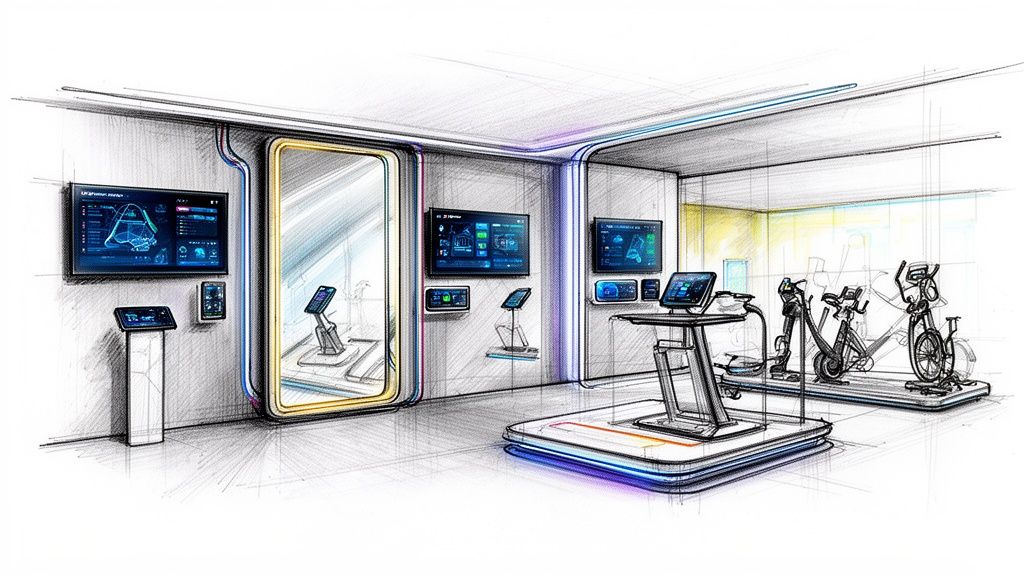
This approach is exemplified by brands like Peloton Studios and UFC Gym, which use technology to build community and enhance member engagement. The design focuses on smooth integration, where screens and sensors feel like natural extensions of the architecture. A tech-forward aesthetic communicates innovation and premium value, appealing to a demographic that values connectivity and personalised data to optimise their fitness journey.
How to Implement This Design
A successful smart gym interior requires meticulous planning to ensure technology enhances, rather than complicates, the user experience.
-
Integrated Infrastructure: Plan for technology from the outset. This includes concealed cable management systems, reinforced walls for mounting heavy screens, and dedicated, well-ventilated server closets.
-
Zoned Tech Experiences: Create specific zones for different technologies. Designate areas for virtual classes with large screens and high-quality audio, and place smart mirrors in personal training or functional fitness areas.
-
Cohesive Lighting: Use ambient and accent lighting that complements digital displays. Opt for dimmable, low-glare LED solutions that prevent reflections on screens while maintaining a motivating atmosphere.
Key Insight: The goal of a smart gym is thoughtful integration, not just adding screens. Technology should feel intuitive and embedded within the design, supporting the member's workout without creating a distraction.
Visualisation tools are crucial for getting this complex integration right. Using a platform like Vibe3D allows designers to map out cable routes, test screen placements to check for glare from different angles, and ensure clear sightlines to all displays. This digital prototyping is explored further in virtual reality interior design, which helps perfect the layout before any hardware is installed.
4. Luxury Gold & Marble Aesthetic
The luxury gold and marble aesthetic transforms a fitness centre into a premium sanctuary, positioning the workout experience as an indulgence rather than a chore. This approach uses high-end materials like Calacatta marble, brushed gold or brass fixtures, and sophisticated lighting to create an atmosphere of opulence and exclusivity. The core idea is to blend performance with pampering, making it one of the most aspirational gym interior ideas for an affluent clientele.
This design is a hallmark of exclusive fitness clubs and high-end hotel gyms, such as select Equinox locations and the fitness centres in Four Seasons hotels. The refined environment appeals to members who view wellness as an integral part of a luxury lifestyle. The thoughtful use of materials and light elevates every touchpoint, from the reception desk to the changing rooms, ensuring the member experience feels consistently first-class and sophisticated.
How to Implement This Design
To achieve a convincing luxury aesthetic, the focus must be on material quality, meticulous detailing, and ambient lighting.
-
Material Selection: Use authentic, large-format marble slabs for feature walls or flooring to create a seamless, grand effect. For metallic accents, choose a consistent finish like brushed brass or warm gold for tapware, light fittings, and equipment frames.
-
Sophisticated Lighting: Layer lighting to build ambience. Integrate soft, indirect LED lighting within ceiling coves or behind mirrors, and use statement chandeliers or crystal pendants as focal points in lounge or reception areas.
-
Refined Colour Palette: Build the design around a base of neutral tones like deep charcoal, cream, or soft white. This allows the marble veining and metallic elements to stand out without overwhelming the space.
Key Insight: The essence of this style is in the sensory details. The coolness of marble, the lustre of polished metal, and the soft glow of ambient light must work in harmony to create an environment that feels both energising and calming.
Pre-visualisation is crucial for getting these intricate details right. High-fidelity rendering tools are essential for testing how light interacts with reflective surfaces like polished marble and gold. By using platforms like Vibe3D, designers can precisely preview material textures and lighting effects, as detailed in these powerful 3ds Max interior design techniques, ensuring the final space exudes genuine luxury.
5. Functional Training Zone Layout
A functional training zone layout is a purpose-driven design that organises the gym floor into dedicated areas for different activities. This approach divides the space into zones like cardio, strength training, Olympic lifting, mobility, and recovery. Each zone features optimised flooring, spacing, and equipment arrangements to support specific training styles, making it a highly efficient model for modern gym interior ideas.
This design philosophy is expertly executed in F45 Training and Orangetheory Fitness studios, where zone-based circuits are core to the workout experience. It prevents member bottlenecking during peak hours and enhances safety by keeping high-impact activities separate from quieter, focused ones. The clear demarcation of space creates an intuitive user journey, allowing members to easily navigate the facility and find the equipment they need.
How to Implement This Design
Successful zoning requires meticulous planning of space, flow, and materials to ensure cohesion and functionality.
-
Define Clear Zones: Use flooring materials to visually and functionally separate areas. For example, use rubber flooring for weightlifting zones, artificial turf for sled pushes, and vinyl or hardwood for group class areas.
-
Optimise Equipment Placement: Group related equipment together within each zone. Ensure adequate clearance around each machine or station to allow for safe movement and proper exercise execution.
-
Manage Transitions: Pay close attention to the transitions between zones. Use flush, integrated flooring changes to prevent trip hazards and create a continuous aesthetic flow throughout the space.
Key Insight: The effectiveness of a zoned layout depends on intuitive circulation paths. The design should guide members effortlessly from one zone to another without creating cross-traffic or congestion.
Visualisation software is crucial for perfecting this complex layout. Using a tool like Vibe3D, you can render traffic flow pathways, test flooring transitions, and preview equipment density in each zone. This allows designers to simulate peak-hour usage and adjust the layout for optimal flow and safety before any physical work begins.
6. Outdoor Integration & Biophilic Design
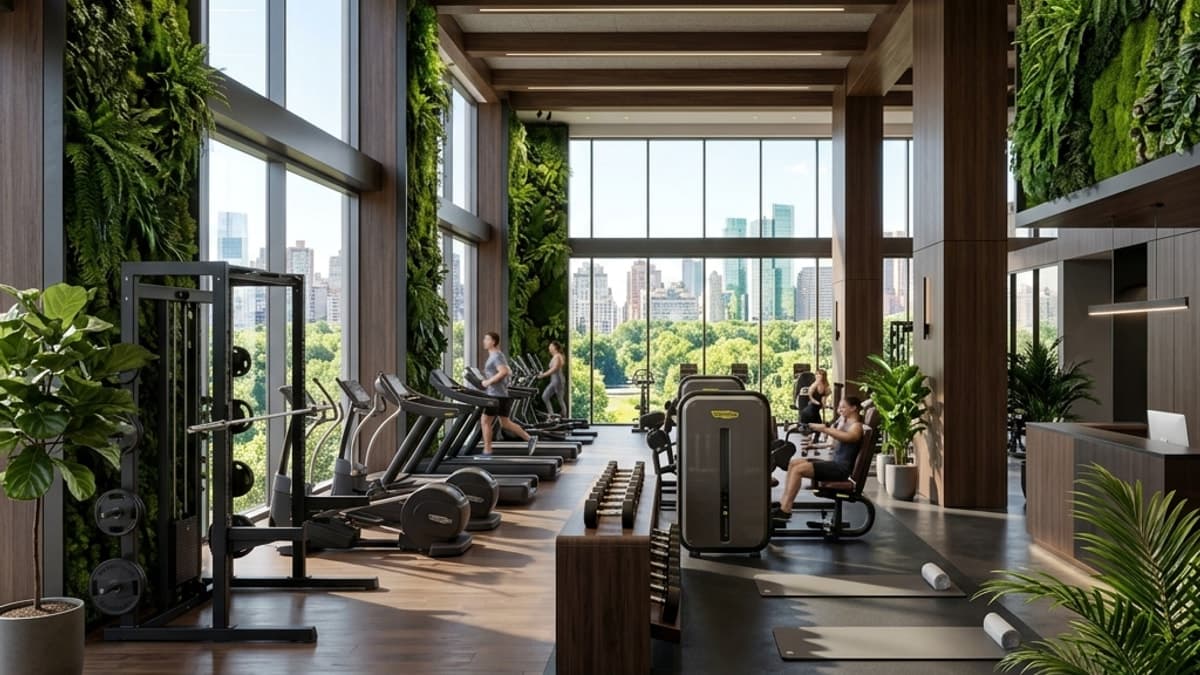
Biophilic design connects gym-goers to the natural world, creating a restorative and energising environment that significantly enhances wellbeing. This approach integrates elements like living green walls, abundant natural light, wood tones, and expansive views of outdoor scenery. The core principle is that a connection to nature reduces stress and improves motivation, making it one of the most impactful gym interior ideas for fostering a holistic wellness experience.
This trend is beautifully executed in facilities like Life Time Athletic, with its expansive outdoor pools and training areas, and Alo Moves studios, which often feature stunning green wall installations. The design creates a sanctuary-like feel that offers a mental escape, encouraging members to spend more time in the space. It’s particularly effective for yoga studios, wellness centres, and premium gyms aiming to offer more than just a workout.
How to Implement This Design
A successful biophilic interior feels cohesive, bringing the calming essence of the outdoors inside without overwhelming the space.
-
Maximise Natural Light: Use large windows, skylights, and glass partitions to flood the space with daylight. Position cardio equipment to face outdoor views, enhancing the member experience.
-
Incorporate Greenery: Install a preserved moss or living green wall as a focal point. Strategically place potted plants throughout the gym; for a thriving and practical design, selecting low maintenance indoor plants is a crucial consideration.
-
Use Natural Materials: Employ a palette of natural materials like light-toned woods for flooring or wall panelling, stone accents, and textiles in earthy colours to create a warm, organic feel.
Key Insight: Authenticity is paramount in biophilic design. The goal is to create a genuine connection to nature, not just a superficial aesthetic. Focus on elements that engage multiple senses, such as the scent of wood or the sound of a water feature.
Visualisation tools are essential for mastering the interplay between indoor and outdoor elements. Using Vibe3D, you can simulate how natural light will interact with green walls and wood finishes throughout the day and across different seasons. This helps perfect the balance and ensure the space feels vibrant and connected year-round. You can learn more about visualising these integrated spaces with site plan rendering.
7. Boutique Niche Studio Design (Cycling, Boxing, Yoga)
The boutique niche studio model focuses on creating a specialised, immersive environment optimised for a single fitness discipline. This approach goes beyond general gym design, curating a cohesive sensory experience where ambient lighting, premium sound systems, and branded aesthetics unite. The goal is to build a powerful community hub where the physical space amplifies the specific workout, making it a standout among modern gym interior ideas.
This hyper-focused design is the signature of brands like Equinox's SoulCycle, known for its concert-style lighting, and Rumble Boxing, which centres its architecture around the boxing ring. The success of these studios lies in their ability to transport members, making the workout feel like an event rather than a routine. By tailoring every design element to the activity, from sightlines to acoustics, these studios foster an intense sense of belonging and motivation.
How to Implement This Design
Executing a successful boutique design requires a deep understanding of the target activity's unique physical and psychological demands.
-
Sensory Immersion: Prioritise lighting and sound. For a spin studio, use programmable LED rigs to create dynamic, high-energy light shows. For a yoga studio, install dimmable, warm lighting and a sound system that delivers clear, ambient soundscapes.
-
Discipline-Centric Layout: Design the space from the member's perspective. Ensure every participant in a cycling studio has a clear view of the instructor. In a boxing studio, the layout should create a raw, energetic flow around a central focal point like a ring or a bag rig.
-
Branded Finishes: Use materials and colours that reflect the brand's ethos and the workout's intensity. Energetic reds and dark, moody tones work well for boxing, while natural woods, soft textures, and calming greens or blues are ideal for yoga and wellness spaces.
Key Insight: The essence of boutique design is its all-encompassing, theatrical nature. The environment should be so carefully crafted that it becomes an integral and memorable part of the workout experience itself.
Visualisation tools are crucial for perfecting this immersive atmosphere. Using a platform like Vibe3D, designers can render specialised lighting rigs to preview their effects on members and equipment. This allows for testing multiple lighting scenes for different phases of a class, ensuring the final design delivers the intended emotional and motivational impact.
8. Inclusive Universal Design & Accessibility
An inclusive and universally designed gym interior proactively accommodates all fitness levels, ages, abilities, and body types. This approach moves beyond basic compliance to create a genuinely welcoming environment for everyone, including members with disabilities. It incorporates features like wheelchair-accessible routes, adaptive equipment, thoughtfully designed restrooms, and clear, multi-format signage. This design philosophy champions diversity, making it one of the most socially conscious gym interior ideas today.
This design is becoming a standard in community-focused facilities like many YMCA locations and specialised adaptive fitness centres. By creating a space that feels safe and usable for all, gyms can attract a broader membership base and foster a stronger community. The focus on clear pathways, logical layouts, and adjustable features benefits every member, not just those with specific accessibility needs.
How to Implement This Design
Executing a truly inclusive design requires meticulous attention to detail and empathy for diverse user experiences.
-
Prioritise Circulation: Ensure pathways are wide enough for wheelchair users (at least 900mm, ideally wider) and free from obstructions. Maintain clear floor space around all equipment for easy transfers and use.
-
Integrate Adaptive Equipment: Include a mix of equipment that serves various abilities, such as dual-cable machines, recumbent bikes, and equipment with removable seats. Group this equipment logically within the main gym floor, not in a segregated area.
-
Focus on Sensory Details: Use high-contrast colours for wayfinding to assist members with low vision. Employ clear, simple iconography alongside text on signage. Consider acoustics to minimise overwhelming noise levels, which can be a barrier for neurodiverse members.
Key Insight: Universal design is not about designing for a single demographic; it's about providing choice and flexibility for everyone. A successful inclusive space feels intuitive and empowering for every person who walks through the door.
Visualisation software is crucial for validating accessibility. Using a tool like Vibe3D, you can run simulations to verify sightlines from different heights, test clear turning radiuses for wheelchairs, and visualise equipment spacing to confirm that all accessibility routes and emergency exits are unobstructed.
9. Vintage & Retro Gym Aesthetic
The vintage and retro aesthetic captures the nostalgic spirit of 1970s to 1990s gym culture, creating a space that feels both fun and authentic. This design uses bold colour palettes, wood panelling, and period-specific equipment to evoke the golden era of bodybuilding and fitness. It is a powerful way to differentiate from the sleek, modern aesthetic of mainstream gyms, offering a unique and memorable workout environment that fosters a strong sense of community. This nostalgic appeal makes it one of the most characterful gym interior ideas available.
This design is exemplified by the legendary Gold's Gym in Venice Beach, which proudly displays its bodybuilding heritage, and Retro Fitness locations that channel a 1970s New York vibe. The aesthetic creates a welcoming, less intimidating atmosphere that encourages members to connect. By celebrating fitness history, it builds a narrative that members can feel a part of, enhancing loyalty and engagement.
How to Implement This Design
Successfully creating a retro gym interior requires attention to detail and a commitment to authenticity.
-
Authentic Colour Palette: Embrace bold and earthy tones. Think mustard yellow, avocado green, and burnt orange, often paired with dark wood or chrome accents. Use stripes or geometric patterns on walls for dynamic visual impact.
-
Period-Specific Materials: Incorporate materials like dark wood panelling, textured wallpapers, and vinyl flooring. Display throwback memorabilia like vintage posters, classic trophies, or even period-appropriate signage.
-
Warm, Atmospheric Lighting: Avoid harsh, cool-toned LEDs. Opt for warmer, tungsten-style lighting to replicate the ambiance of older gyms. Use classic fixture designs like globe pendants or track lighting with a vintage finish.
Key Insight: Authenticity is paramount in a retro design. The goal is to create a thoughtful homage, not a caricature. Every element, from the font on the signage to the patina on metal fixtures, should contribute to a cohesive and immersive experience.
Tools like Vibe3D are invaluable for balancing these elements. You can test bold colour combinations to avoid overwhelming the space and simulate warm lighting to achieve the perfect nostalgic glow. It also allows for previewing how different textures, like wood grain and worn leather, will interact, ensuring the final design feels genuine and inviting.
10. Community-Focused Social Hub Design
This approach transforms a gym from a simple workout facility into a vibrant lifestyle destination. It prioritises member interaction and community building by integrating large social areas, smoothie bars, lounge seating, and dedicated event spaces alongside traditional fitness zones, often borrowing lighting and layout cues straight from restaurant interior design. The design acknowledges that for many, fitness is a social experience, creating an environment where members connect and spend time beyond their training sessions. This holistic view is one of the most impactful modern gym interior ideas.
This model is expertly executed by brands like Life Time Athletic Club, which builds entire lifestyle ecosystems, and Equinox, with its integrated cafes and retail spaces. The goal is to foster a sense of belonging, which significantly boosts member retention. By designing spaces that encourage organic social interaction before and after workouts, the gym becomes an indispensable part of a member's daily routine, not just a place to exercise.
How to Implement This Design
Successfully creating a social hub requires an integrated blend of active and relaxation zones, using design to encourage flow and interaction.
-
Zone Integration: Position social areas like cafes or lounges near the entrance or with clear sightlines into the main fitness floor. This creates a visual connection and an energetic, welcoming atmosphere upon arrival.
-
Flexible Furnishings: Use a mix of seating options, from communal tables that encourage group interaction to comfortable armchairs for individual relaxation. Modular furniture can allow spaces to be easily reconfigured for workshops or community events.
-
Material and Acoustic Transitions: Define the shift from high-energy workout zones to calm social areas using different materials, lighting, and acoustic treatments. Softer textures, warmer lighting, and sound-dampening panels in lounge areas can create a welcoming contrast.
Key Insight: A successful social hub design feels intentional, not like an afterthought. Every element, from the flow of traffic to the comfort of the seating, should be orchestrated to enhance the member's social experience.
Visualisation tools are crucial for balancing these distinct environments. Using a platform like Vibe3D, designers can test sightlines between social hubs and fitness zones, render seating areas at different occupancy levels to ensure comfort, and simulate how the space transforms for special events, ensuring the design supports both daily operations and community-building initiatives.
10 Gym Interior Concepts Compared
| Design Concept | Implementation Complexity 🔄 | Resource Requirements ⚡ | Expected Outcomes 📊 | Ideal Use Cases 💡 | Key Advantages ⭐ |
|---|---|---|---|---|---|
| Industrial Minimalist Design | Moderate 🔄 — straightforward finishes; acoustic & lighting tuning | Low–Moderate ⚡ — reuse structure; modest fit-out | 📊 Clear, professional aesthetic; high photo appeal | 💡 Serious training gyms, CrossFit, budget-conscious brands | ⭐ Cost-effective, authentic, low-maintenance |
| Bright, Modern Wellness Hub Design | High 🔄 — complex glazing, acoustics, HVAC | High ⚡ — premium finishes, daylighting, maintenance | 📊 Premium memberships; high retention & social reach | 💡 Wellness centers, premium clubs, yoga/Pilates | ⭐ Bright, calming, highly marketable |
| High-Tech Smart Gym Integration | High 🔄 — IT integration, infrastructure, updates | High ⚡ — hardware, networking, ongoing support | 📊 Differentiation; data-driven retention; hybrid offerings | 💡 Tech-forward brands, boutique studios, premium tiers | ⭐ Future-proofing, strong data & engagement |
| Luxury Gold & Marble Aesthetic | High 🔄 — precision detailing, specialist trades | Very High ⚡ — luxury materials, specialist maintenance | 📊 Premium pricing; aspirational brand positioning | 💡 Luxury hotels, boutique high-end gyms | ⭐ Memorable, status-driven, highly instagrammable |
| Functional Training Zone Layout | Moderate 🔄 — detailed spatial planning per zone | Moderate ⚡ — varied flooring, equipment diversity | 📊 Efficient flow; higher equipment utilization | 💡 Multi-discipline gyms, CrossFit, large facilities | ⭐ Optimized operations, flexible programming |
| Outdoor Integration & Biophilic Design | High 🔄 — plant systems, daylighting, HVAC tweaks | Moderate–High ⚡ — landscaping, irrigation, maintenance | 📊 Improved wellbeing & sustainability credentials | 💡 Wellness brands, locations with natural views | ⭐ Enhances wellbeing, ESG-friendly, calming |
| Boutique Niche Studio Design (Cycling/Boxing/Yoga) | Moderate 🔄 — focused atmosphere & AV systems | Moderate ⚡ — specialized equipment, lighting/sound | 📊 Strong member loyalty; viral marketing potential | 💡 Single-discipline studios, experiential boutique brands | ⭐ Highly branded, immersive, premium pricing |
| Inclusive Universal Design & Accessibility | Moderate 🔄 — code compliance, specialized detailing | Moderate–High ⚡ — adaptive equipment, accessible fixtures | 📊 Broader membership base; improved reputation | 💡 Community-focused gyms, public facilities, adaptive programs | ⭐ Inclusive, legally compliant, market-expanding |
| Vintage & Retro Gym Aesthetic | Moderate 🔄 — curated sourcing, authentic finishes | Low–Moderate ⚡ — secondhand sourcing, specialty finishes | 📊 Distinctive identity; strong nostalgic engagement | 💡 Independent gyms, themed boutique locations | ⭐ Memorable, cost-flexible, community-building |
| Community-Focused Social Hub Design | High 🔄 — multi-use planning, F&B, events operations | High ⚡ — larger footprint, café/retail fit-out | 📊 Higher dwell time; diversified revenue streams | 💡 Lifestyle clubs, large urban centers, brand communities | ⭐ Drives retention, ancillary revenue, strong community bonds |
Frequently Asked Questions
Choosing a direction from ten distinct concepts naturally raises practical questions about cost, layout, and execution. Here are answers to the questions designers and gym owners ask most often once they've narrowed down their favourite gym interior ideas.
How much should I Budget for a gym interior design overhaul?
Budget varies dramatically by style, not just square footage. Industrial Minimalist and Vintage & Retro designs sit at the low-to-moderate end because they reuse existing structure, polished concrete, and secondhand fixtures. Bright Modern Wellness Hub, High-Tech Smart Gym, Luxury Gold & Marble, and Community-Focused Social Hub designs land on the high end, driven by premium glazing, IoT hardware, marble slabs, and café build-outs respectively. Before locking in a number, map your chosen concept against the comparison table above and treat "Resource Requirements" as your first budget signal.
How do I choose right style for my gym's size and type?
The right style follows function first, budget second. A small boutique studio built around one discipline, cycling, boxing, or yoga, suits the Boutique Niche Studio approach because sightlines and acoustics can be tailored to a single activity. A large multi-purpose facility benefits more from a Functional Training Zone layout, which separates cardio, lifting, and mobility work to prevent bottlenecking. If your gym doubles as a lifestyle destination with cafes and events, the Community-Focused Social Hub model fits best, but only if you have the floor space to support it.
What flooring and lighting choices matter most in gym interior design?
Flooring and lighting should follow the activity happening in each zone, not a single blanket spec. Rubber flooring suits weightlifting areas, artificial turf works for sled pushes, and vinyl or hardwood fits group class rooms, as outlined in the Functional Training Zone section above. Lighting needs similar zoning: dimmable, low-glare LEDs protect screens in a High-Tech Smart Gym, while warm, tungsten-style fixtures preserve the mood in a Vintage & Retro space. Get either wrong and function or atmosphere suffers.
Why should I render my gym design before construction begins?
Rendering catches expensive mistakes while they're still cheap to fix, on screen instead of on site. Platforms like Vibe3D let you test how natural light hits a biophilic green wall, whether marble finishes read as luxurious or cold under different lighting, and whether sightlines work in a boxing or cycling studio, all before a single wall goes up. Since several concepts here, from Luxury Gold & Marble to Inclusive Universal Design, hinge on details that are hard to judge from a 2D plan, a 3D walkthrough gives you and your client confidence before committing budget to a build-out.
Visualising Your Vision: The Final Rep in Gym Design
The journey through these diverse gym interior ideas reveals a powerful truth: the modern fitness space is no longer just a room with equipment. It is an experience, a community hub, and a direct reflection of a brand's ethos. From the raw, unpolished energy of an Industrial Minimalist layout to the serene, nature-infused atmosphere of Biophilic Design, each concept serves a unique purpose and caters to a specific clientele. The future of fitness design lies not in a one-size-fits-all template, but in the thoughtful curation of elements that inspire motivation, foster community, and promote well-being.
Key Takeaways for a Winning Design
The most impactful designs we explored share a common foundation: intentionality. A Luxury Gold & Marble aesthetic is not merely about expensive materials; it's about creating an atmosphere of exclusivity and premium service. Similarly, a Community-Focused Social Hub integrates cafes and lounges not as an afterthought, but as a core component of its business model to boost member retention. Your role as a designer is to translate a brand’s vision into a physical, functional, and emotionally resonant space.
Remember these crucial takeaways:
-
Purpose-Driven Layouts: Whether designing a Functional Training Zone or a Boutique Niche Studio, the layout must prioritise user experience and operational flow. Every square metre should support the intended activity.
-
Atmosphere is Everything: Lighting, colour palettes, and materials work in concert to create a specific mood. A High-Tech Smart Gym will use dynamic LED lighting and sleek surfaces, while a Vintage & Retro Gym will use warm tones and nostalgic textures to build its identity.
-
Inclusivity as a Standard: Universal Design is not a niche; it is a fundamental aspect of modern, responsible design. Creating accessible and welcoming spaces expands your client's market and builds a more positive, inclusive community.
From Concept to Reality: The Power of Visualisation
Ultimately, the success of any of these gym interior ideas hinges on flawless execution. The gap between a brilliant concept and a built reality can be vast, filled with costly revisions and client misunderstandings. This is where precise, photorealistic interior rendering becomes an indispensable tool. It allows you to test the interplay of natural light in an Outdoor-Integrated space, refine the user journey in a multi-zone facility, and get stakeholder buy-in on bold material choices long before construction begins.
By embracing detailed 3D visualisation, you de-risk the entire creative process. You can confidently present a vision, knowing that every texture, shadow, and reflection has been accounted for. This level of foresight ensures that the final space not only looks stunning but functions perfectly, inspiring every person who walks through its doors. The most memorable gyms are not just built; they are meticulously visualised, refined, and brought to life with purpose.
Ready to transform your gym interior ideas from concepts into photorealistic masterpieces? Vibe3D offers an AI-powered platform that allows you to create stunning, high-fidelity 3D renderings and visualisations with unparalleled speed and ease. Bring your vision to life and present your designs with confidence by visiting Vibe3D to see how it works.